
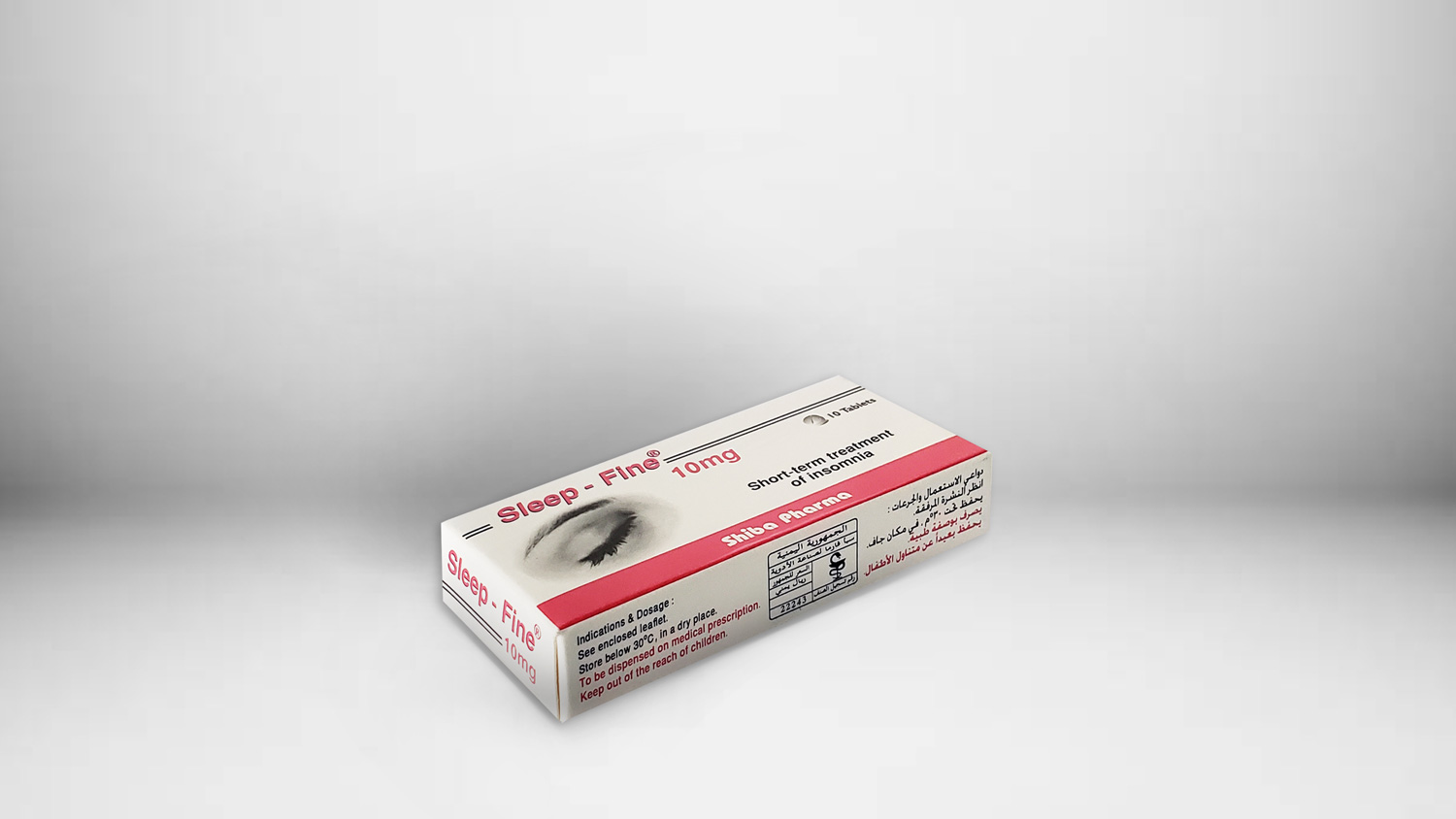
Section :
Sleep Fine
📌 COMPOSITION
Each tablet contains: Zaleplon USP 5 mg, 10 mg.
📌 DESCRIPTION
Sleep Fine (Zaleplon) is an ultra‑short‑acting sedative‑hypnotic drug. It is a non‑benzodiazepine hypnotic from the pyrazolopyrimidine class. Zaleplon is a full agonist for the benzodiazepine GABAAα1 sub‑receptor site, which helps produce the primary therapeutic hypnotic properties, and it has lower affinity for the α2 and α3 subsites, which help produce anxiolytic and muscle relaxant effects. The absorption rate of Zaleplon is rapid, and the onset of therapeutic effects is reached within 5-15 minutes following ingestion, and the protein binding is 60%. Zaleplon is metabolised mainly by the liver. The elimination half‑life of Zaleplon is 1-1.5 hours, and it is excreted mainly in urine 71% and faeces 17%.
📌 INDICATIONS
Zaleplon is effective in the management or treatment of insomnia, primarily characterised by difficulty falling asleep.
📌 DOSAGE & ADMINISTRATION
It is not recommended to take food at least 2 hours before administration of Sleep Fine, because food delays the absorption of the drug. Sleep Fine should be taken immediately before going to bed. If the patient forgets to take it at bedtime, he should not take it at any other time. It should not be taken as a second dose in the same night if the patient experiences difficulty sleeping after taking the first dose or if he wakes in the night.
- Adults: The total daily dose should not exceed 10 mg.
- Elderly and patients with mild to moderate hepatic impairment: The recommended dose is 5 mg.
- Renal impairment: No dose adjustment is required in patients with mild to moderate renal impairment.
📌 RESTRICTIONS ON USE
Contraindications
- Hypersensitivity to Zaleplon.
- Myasthenia gravis.
- Severe hepatic or renal impairment.
- People with severe breathing problems.
- Sleep apnoea syndrome.
- Children and adolescents under 18 years old.
Precautions
- Cessation of administration of the drug should be gradual, because sudden cessation can lead to withdrawal symptoms such as headache, muscle pain, anxiety, tension, irritability, confusion.
- Sleep Fine should not be taken for a longer period than prescribed by the doctor.
- Some behaviours have been reported during the night after taking the drug — the patient was not fully awake — and the patient usually does not remember these events when he wakes up in the next morning. The use of alcohol or other central nervous system depressant drugs increases the risk of such behaviours (which include sleepwalking, eating food). In this case, the patient should consult the doctor immediately.
- To reduce the risk of anterograde amnesia and psychomotor impairment after taking these drugs, the patient should not undertake activities requiring psychomotor co‑ordination until 4 hours after taking the drug.
- Severe anaphylactic reactions have been reported, such as skin rash, dyspnoea, angioedema involving the larynx or tongue, nausea or vomiting. The patient should consult the doctor.
- Insomnia may persist or worsen after a short course of Zaleplon treatment; this indicates a need to re‑evaluate the patient.
- Caution should be taken in patients with a history of alcohol or medicinal product addiction or abuse, because the risk of dependence may increase with these patients.
- Zaleplon is not recommended to be prescribed to patients with psychotic illness or suffering from depression as primary treatment or alone.
Effects on the capacity to drive vehicles or use machines
The patient may feel sleepy or have impaired muscle function and may lose concentration, especially if sleep duration is less than 7-8 hours after taking Sleep Fine, which affects the ability to drive or use machines.
Use in Pregnancy and Lactation
There are no sufficient clinical experiments on the safety of use of Sleep Fine during pregnancy; due to that, it is not recommended to be used during this period, particularly in the third trimester of pregnancy. Significant amounts of this medicine may pass into breast milk, so it should not be used by nursing mothers, as it may be harmful to the infant.
📌 DRUG INTERACTIONS
- Co‑administration of Zaleplon with alcohol, antiepileptics, antipsychotics, baclofen, barbiturates, hypnotics, benzodiazepines, MAOI antidepressants, tricyclic antidepressants, sedating antihistamines, anaesthetics, and strong opioid painkillers increases the sedative effect.
- The amount of Zaleplon in the blood may be increased by co‑administration with drugs that inhibit the CYP3A4 enzyme (one of the enzymes responsible for Zaleplon metabolism), such as erythromycin and the H2 antagonist cimetidine, while it may be decreased by co‑administration with drugs that induce the CYP3A4 enzyme, such as rifampicin and carbamazepine.
📌 SIDE EFFECTS
Taking Zaleplon may cause some side effects, but not all of these effects necessarily appear in every patient. The most common effects: somnolence, dysmenorrhoea, paraesthesia. Other uncommon side effects may appear such as: confusion, hallucinations, loss of appetite, dizziness, visual disturbances.
📌 OVERDOSAGE
Symptoms: In mild cases, symptoms include drowsiness and mental confusion. In more serious cases, symptoms include hypotension, rarely coma and very rarely death.
Management of overdose: Induce vomiting or perform gastric lavage. If there is no advantage in emptying the stomach, the patient should be given activated charcoal to reduce absorption, and the respiratory and cardiovascular systems should be monitored. Flumazenil may be used as an antidote.
📌 STORAGE INSTRUCTIONS
Store below 30°C in a dry place.
📌 PHARMACEUTICAL FORMS
- Sleep Fine 5 Tablets: Pack of 10 tablets and hospital packs of different sizes.
- Sleep Fine 10 Tablets: Pack of 10 tablets and hospital packs of different sizes.
📌 INSTRUCTIONS TO THE PATIENT
- Medicament is a product which affects your health, and its consumption contrary to instructions is dangerous for you.
- Follow strictly the doctor's prescription, the method of use and the instructions of the pharmacist who sold the medicament.
- The doctor and the pharmacist are experts in medicine, its benefits and risks.
- Do not by yourself interrupt the period of treatment prescribed for you.
- Do not repeat the same prescription without consulting your doctor.
Keep medicament out of reach of children
Mfd. By | Council of Arab Health Ministers | Union of Arab Pharmacists