
Section :
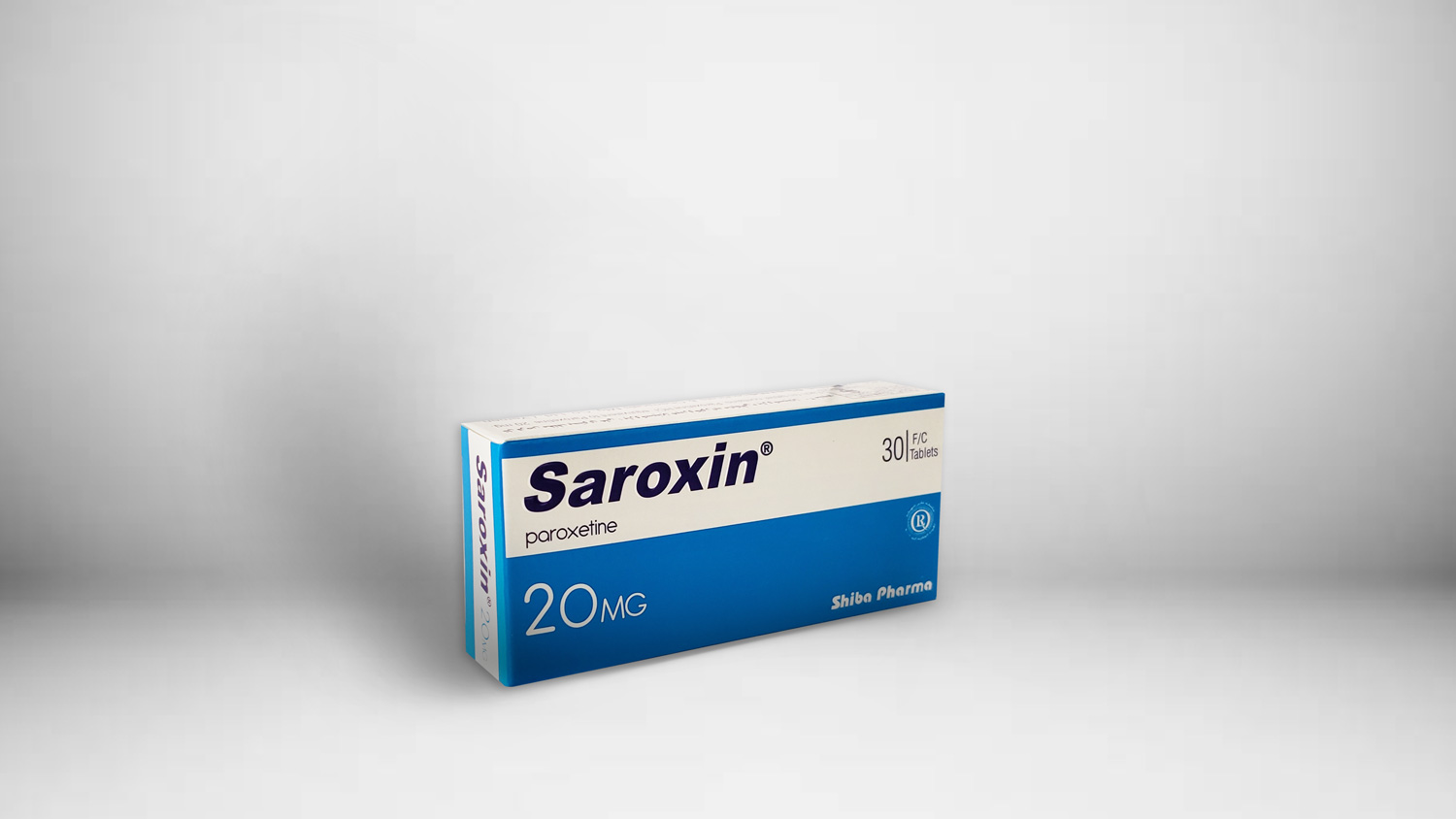
Saroxin
📌 COMPOSITION
Each film‑coated tablet contains: Paroxetine HCl equivalent to Paroxetine 20 or 30 mg.
📌 DESCRIPTION
Saroxin (Paroxetine) is an antidepressant belonging to a group of drugs called selective serotonin reuptake inhibitors (SSRIs). Serotonin is present normally in the human brain and is responsible for elevation of mood, whereas its concentration is lower than normal in patients with depression and anxiety. Paroxetine works by increasing the level of serotonin to the normal level; it prevents the neuron from re‑uptaking serotonin that was secreted in the synaptic cleft in the brain, hence increasing the efficiency of this substance in preventing depression and anxiety. In contrast to other tricyclic antidepressants, Paroxetine has little effect on alpha, beta, dopamine and histamine receptors, hence the side effects on the cardiovascular and central nervous systems are less. Paroxetine is well absorbed from the GIT and needs about 24 hours to start the elimination of its effect from the body.
📌 INDICATIONS
- Major depressive episodes.
- Obsessive‑Compulsive Disorder (OCD).
- Panic disorder (agoraphobia).
- Social anxiety disorder / social phobia.
- Generalised anxiety disorder.
- Post‑traumatic stress disorder (e.g., following a car accident, natural disaster).
📌 DOSAGE & ADMINISTRATION
It is recommended to take the dose once daily in the morning with food.
Depressive episodes, Social anxiety disorders / social phobia, Generalised anxiety disorder & Post‑Traumatic stress disorder:
The recommended dose is 20 mg daily. Can be increased to the maximum dose 50 mg/day in gradual steps by increasing 10 mg/day every week. Long‑term use should be regularly evaluated.
Obsessive‑Compulsive Disorder (OCD) & Panic disorder:
The recommended dose for each case is 40 mg daily. But patients with OCD should start with 20 mg/day, while patients with panic disorder should start with 10 mg/day, then the dose is gradually increased by 10 mg/day increments every week to the recommended dose, and if necessary to 60 mg/day as a maximum dose.
Older patients: As the above determined doses, but the maximum is 40 mg daily.
📌 RESTRICTIONS ON USE
Contraindications
The following cases should not use Saroxin:
- Hypersensitivity to paroxetine.
- Patients who are taking monoamine oxidase inhibitors or have taken them in the last two weeks.
- Patients who are taking antipsychotic drugs (thioridazine or pimozide).
- Paroxetine should not be used in the treatment of children and adolescents under the age of 18 years.
Precautions
Caution should be taken and the physician consulted in the following cases:
- History of mania or suffering from bipolar disorder (symptoms include serious mood swings between mania and depression), history of suicide attempt or thinking about suicide, patients with epilepsy or suffering from seizures, diabetes, cardiac patients, patients who have or have had glaucoma, patients with low sodium levels in the blood.
- Patients with abnormal bleeding or taking drugs increasing the tendency to bleed, depressed patients undergoing electroconvulsive therapy.
- The patient should be under observation, especially when starting treatment or if the dose changes, to avoid serotonin syndrome or any symptom complications.
- Abrupt discontinuation should be avoided; the daily dose should be gradually decreased with 10 mg weekly intervals. If intolerable symptoms occur following a decrease in the dose or upon discontinuation of treatment, then resuming the previously prescribed dose may be considered. Subsequently, the physician may continue decreasing the dose, but at a more gradual rate.
- The dose should be adjusted in patients with liver disease or kidney disease.
Effects on the ability to drive vehicles or use machines
Caution should be taken when driving or using machines during Saroxin.
Use in Pregnancy and Lactation
Paroxetine is considered a category D drug, so it should not be used during pregnancy except when strictly indicated under physician supervision. During the lactation period, the doctor may allow the mother to take Paroxetine.
📌 DRUG INTERACTIONS
- Concomitant use of Paroxetine with Tamoxifen should be avoided because the effect of Tamoxifen is reduced.
- Caution should be taken when Paroxetine is used with the following drugs:
- Procyclidine: may increase its level in plasma, so the dose of Procyclidine should be adjusted.
- Tryptophan, St. John's Wort herb, SSRIs, Tramadol, Lithium, because the effect of these drugs adds to the effect of Paroxetine.
- Drugs metabolising enzyme inducers such as Carbamazepine, Rifampicin, Phenobarbital, Phenytoin and Fosamprenavir/Ritonavir.
- Drugs that are metabolised by the CYP2D6 enzyme (such as tricyclic antidepressants, Risperidone, class 1C antiarrhythmics), because Paroxetine is an inhibitor of this enzyme, hence the concentration of these drugs is increased in the blood.
- Oral anticoagulants and drugs that increase the risk of bleeding (NSAIDs, antipsychotics such as Clozapine and phenothiazine, and tricyclic antidepressants).
📌 SIDE EFFECTS
The side effects that may appear at the beginning of treatment are mild and transient and disappear after the first weeks of treatment, including: nausea, delayed ejaculation, decreased appetite, increases in cholesterol levels, somnolence, insomnia, agitation, abnormal dreams (including nightmares), impaired concentration, dizziness, tremor, headache, blurred vision, yawning, constipation, diarrhoea, vomiting, dry mouth, sweating, asthenia and weight gain.
📌 OVERDOSAGE
Symptoms of overdosage: Nausea, vomiting, tremor, dilated pupils, dry mouth, irritability, sweating, somnolence, fever and involuntary muscle contractions.
Treatment: Administration of 20-30 g activated charcoal may be considered if possible within a few hours after overdose intake to decrease absorption of paroxetine. Supportive care and treatment of symptoms with frequent monitoring of vital signs is indicated.
📌 STORAGE INSTRUCTIONS
Store below 30°C in a dry place.
📌 PHARMACEUTICAL FORMS
- Saroxin 20: pack of 30 tablets and hospital packs of different sizes.
- Saroxin 30: pack of 30 tablets and hospital packs of different sizes.