
Section :
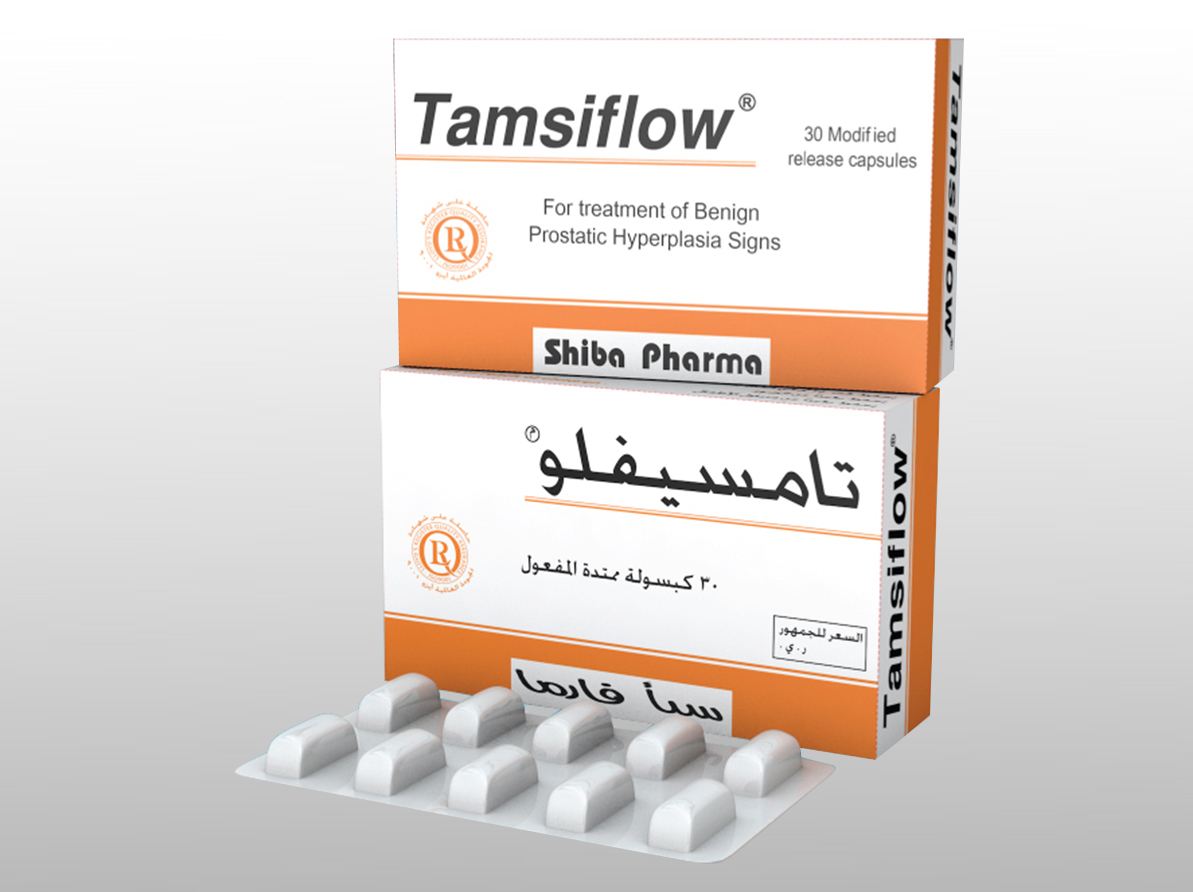
Tamsiflow
📌 COMPOSITION
Each capsule contains: Tamsulosin Hydrochloride 0.4 mg (as modified‑release pellets).
📌 DESCRIPTION
Tamsiflow (Tamsulosin Hydrochloride) is a new, potent and long‑acting alpha‑1 receptor antagonist. It inhibits alpha‑1 receptors selectively and competitively. Blockade of these adrenoreceptors can cause smooth muscle in the bladder neck and prostate to relax, resulting in improvement in urine flow rate and reduction in symptoms of benign prostatic hyperplasia (BPH). Tamsulosin is not intended for use as an antihypertensive drug. The plasma concentration of unchanged drug reached a peak at 7 to 8 hours after single oral administration of 0.1 to 0.6 mg Tamsulosin hydrochloride to healthy male adults. The half‑life is 9.0 to 11.6 hours. The excretion rate of unchanged drug in the urine up to 30 hours after administration remained almost constant at 12-14%. No significant changes in the excretion rate after repeated administration were observed.
📌 INDICATIONS
Tamsiflow is intended for the treatment of the signs and symptoms of benign prostatic hyperplasia (BPH).
📌 DOSAGE & ADMINISTRATION
- Adults: The usual dose is 0.4 mg once daily after meals.
- Elderly: Elderly patients often have renal hypofunction. In case patients cannot tolerate this dosage, other appropriate measures must be taken.
📌 RESTRICTIONS ON USE
Contraindications
Tamsulosin is contraindicated in the following cases:
- Patients with a history of hypersensitivity reactions to the drug.
- Patients with impaired renal function.
Precautions
- Carcinoma of the prostate and BPH cause many of the same symptoms. These two diseases frequently co‑exist. Patients should be evaluated prior to the start of treatment with Tamsulosin to rule out the presence of carcinoma of the prostate.
- Use Tamsulosin with caution concerning dosage and administration, since overdosage may cause a decrease in blood pressure.
- Patients must be watched for any changes in blood pressure occurring with postural change.
- The drug does not eliminate the cause of the disease, but gives symptomatic relief. If the expected response does not appear, surgical therapy or other alternative procedures may be considered.
Effect on the capacity to drive vehicles and operate machines
Patients should be cautioned against engaging in potentially hazardous activities requiring alertness, such as working at heights, driving cars or operating machines.
Use in Pregnancy and Lactation
Administer under medical supervision.
📌 DRUG INTERACTIONS
- Before the start of treatment, patients should be asked whether they are taking any antihypertensive drugs. If such drugs are used, blood pressure during treatment should be monitored. If a decrease in blood pressure is observed, the treatment should be discontinued or other appropriate measures taken.
- Tamsulosin should be used with caution in combination with cimetidine, particularly at doses higher than 0.4 mg.
- Caution should be exercised with concomitant administration of Tamsulosin and warfarin.
📌 ADVERSE EFFECTS
- Psychoneurological: Dizziness, dizziness on standing up or wooziness may occur infrequently.
- Cardiovascular: Hypotension or tachycardia may occur infrequently.
- Hypersensitivity: Such as rash; administration should be discontinued if such symptoms occur.
- Gastrointestinal: Nausea, vomiting, stomach discomfort and heaviness, stomachache, decreased appetite or diarrhoea may occur infrequently.
- Hepatic: Elevations of serum GOT, GPT or LDH may occur very rarely.
- Others: Nasal obstruction, oedema, difficulty in swallowing, burning sensation in the throat.
📌 OVERDOSAGE
Overdosage of Tamsulosin leads to hypotension; support of the cardiovascular system is very important. Restoration of blood pressure and normalisation of heart rate may be accomplished by keeping the patient in the supine position. If this measure is inadequate, then administration of intravenous fluids should be considered. If necessary, a vasopressor should then be used and renal function should be monitored. Dialysis is unlikely to be of benefit because Tamsulosin is highly bound to plasma protein.
📌 STORAGE INSTRUCTIONS
Store below 25°C in a dry place, protect from light.
📌 PHARMACEUTICAL FORMS
- Tamsiflow Capsules: Pack of 30 capsules and hospital packs of different sizes.