
Section :
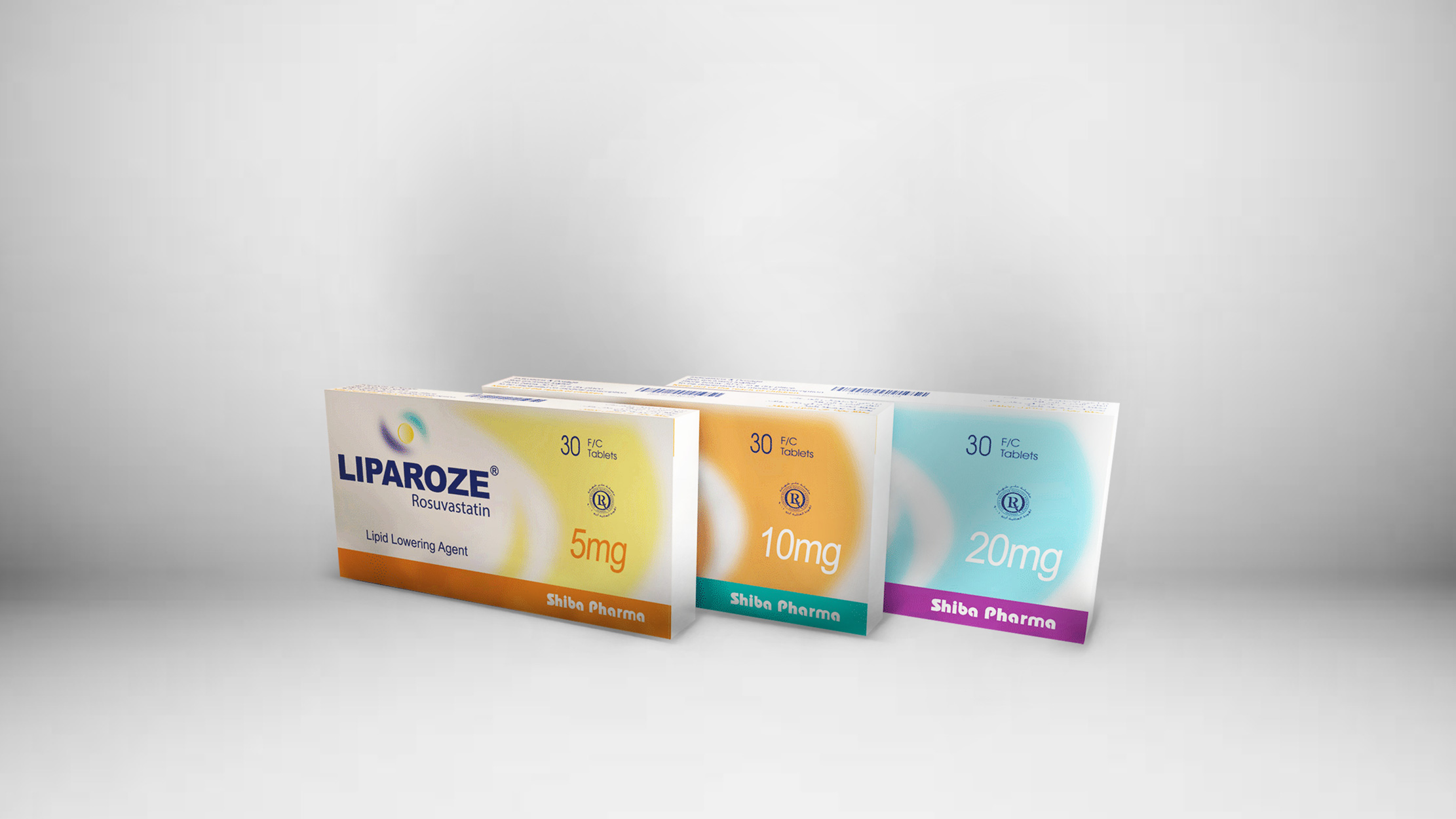
Liparoze
📌 COMPOSITION
Each F/C tablet contains: Rosuvastatin calcium equivalent to Rosuvastatin 5 mg, 10 mg and 20 mg.
📌 DESCRIPTION
Liparoze (Rosuvastatin) is an anti‑hypercholesterolaemia drug that belongs to a group called statins. It works by reducing the plasma lipids, leading to reduced cardiovascular diseases. Rosuvastatin inhibits HMG-CoA reductase, which is involved in cholesterol synthesis in hepatocytes, as well as inhibiting the synthesis of VLDL. Liparoze also increases the number of hepatic LDL receptors on the cell surface, enhancing the uptake and catabolism of LDL from the blood circulation, thereby decreasing LDL and VLDL levels in the blood — which are the low‑density lipoproteins that are the "bad" type of cholesterol that precipitates in the blood vessels. Rosuvastatin also increases HDL quantity in the blood (the high‑density lipoprotein considered the "good" type of cholesterol); it takes the excess amount of lipids from the blood to the liver for catabolism. Rosuvastatin is the most potent statin for lowering bad cholesterol (LDL) and does not interfere as much with other drugs because it is minimally involved with the CYP450 enzyme. It has fewer muscle and nervous system side effects because it has a tendency to dissolve or combine with water (hydrophilic).
📌 INDICATIONS
- Treatment of hypercholesterolaemia as an adjunct to diet when the response to diet and other non‑medical treatment (e.g., exercise, weight reduction) is inadequate for controlling hypercholesterolaemia.
- Prevention of cardiovascular diseases.
📌 DOSAGE & ADMINISTRATION
Before starting treatment, you should be on a standard cholesterol‑lowering diet, and the diet should be continued during treatment. Liparoze can be taken at any time of day, with or without food.
Treatment of hypercholesterolaemia:
- Adults: Recommended starting dose is 5 mg or 10 mg orally once daily. If necessary, the dose can be adjusted after 4 weeks. The maximum usual dose is 20 mg daily, but in patients with severe hypercholesterolaemia at high cardiovascular risk where the treatment goal is not achieved on 20 mg, a dose of 40 mg may be given as a maximum dose.
- Children and adolescents 6 to 9 years with heterozygous familial hypercholesterolaemia: The usual dose is 5-10 mg once daily.
- Children and adolescents 10 to 17 years with heterozygous familial hypercholesterolaemia: The usual dose is 5-20 mg once daily.
- Children and adolescents 6 to 17 years with homozygous familial hypercholesterolaemia: The usual starting dose is 5-10 mg once daily depending on age and body weight. The maximum daily dose is 20 mg once daily.
- Elderly > 70 years, patients with mild to moderate renal impairment, patients of Asian ancestry (Japanese, Chinese, Filipino, Vietnamese, Koreans or Indians), or patients with predisposing factors to myopathy: Should consult their doctor. The recommended daily dose is 5 mg.
Prevention of cardiovascular disease risk: The usual dose is 20 mg daily.
📌 RESTRICTIONS ON USE
Contraindications
- Hypersensitivity to Rosuvastatin.
- Patients with active liver disease.
- Patients with myopathy.
- Patients with severe renal impairment (Cr.Cl < 30 ml/min).
- The 40 mg dose is contraindicated in patients with: moderate renal impairment, hypothyroidism, myopathy, Asian patients, concomitant use with fibrates, or previous history of muscle toxicity with HMG-CoA inhibitor drugs or with fibrates.
Precautions
- Renal impairment, hypothyroidism, or age > 70 years.
- History of hereditary muscular disorders or previous history of muscular toxicity with fibrates or another HMG-CoA reductase inhibitor.
- The drug affects the liver, so if transaminase is three times greater than the ULN, the patient should consult the doctor.
- Patients at high risk of future diabetes (fasting blood glucose > 5.6 mmol/L, BMI > 30 kg/m², raised triglycerides, history of hypertension): The use of Liparoze may produce an increase in glucose level, so formal diabetes care is appropriate.
Use in Pregnancy and Lactation
If you are pregnant, there is a probability of being pregnant, or during breastfeeding, do not take Liparoze.
Effects on the capacity to drive vehicles or use machines
Liparoze may cause dizziness for some patients, so caution should be taken during driving.
📌 DRUG INTERACTIONS
- Ciclosporin, protease inhibitors, gemfibrozil and other lipid‑lowering drugs cause an increased risk of myopathy.
- Vitamin K antagonists interact with Liparoze, so the dose should be adjusted according to the INR ratio, and the ratio should be monitored periodically.
- Erythromycin and antacids containing aluminium and magnesium hydroxide result in a decrease in Rosuvastatin plasma concentration, so antacids must be taken two hours after taking Liparoze.
- Concomitant use of Liparoze with oral contraceptives leads to an increase in contraceptive concentration in plasma, so the dose should be adjusted.
📌 ADVERSE EFFECTS
Some of the side effects will happen to some patients — not all patients will suffer from side effects. These include: headache, dizziness, constipation, nausea, abdominal pain, myalgia, asthenia, pruritus, rash and urticaria.
📌 OVERDOSAGE
There is no specific treatment in case of overdose; the patient should be treated symptomatically and supportively. Liver function and CK levels should be monitored.
📌 STORAGE INSTRUCTIONS
Store below 30°C in a dry place.
📌 PHARMACEUTICAL FORMS
- Liparoze 5 mg Tablets: Pack of 30 tablets and hospital packs of different sizes.
- Liparoze 10 mg Tablets: Pack of 30 tablets and hospital packs of different sizes.
- Liparoze 20 mg Tablets: Pack of 30 tablets and hospital packs of different sizes.