
Section :
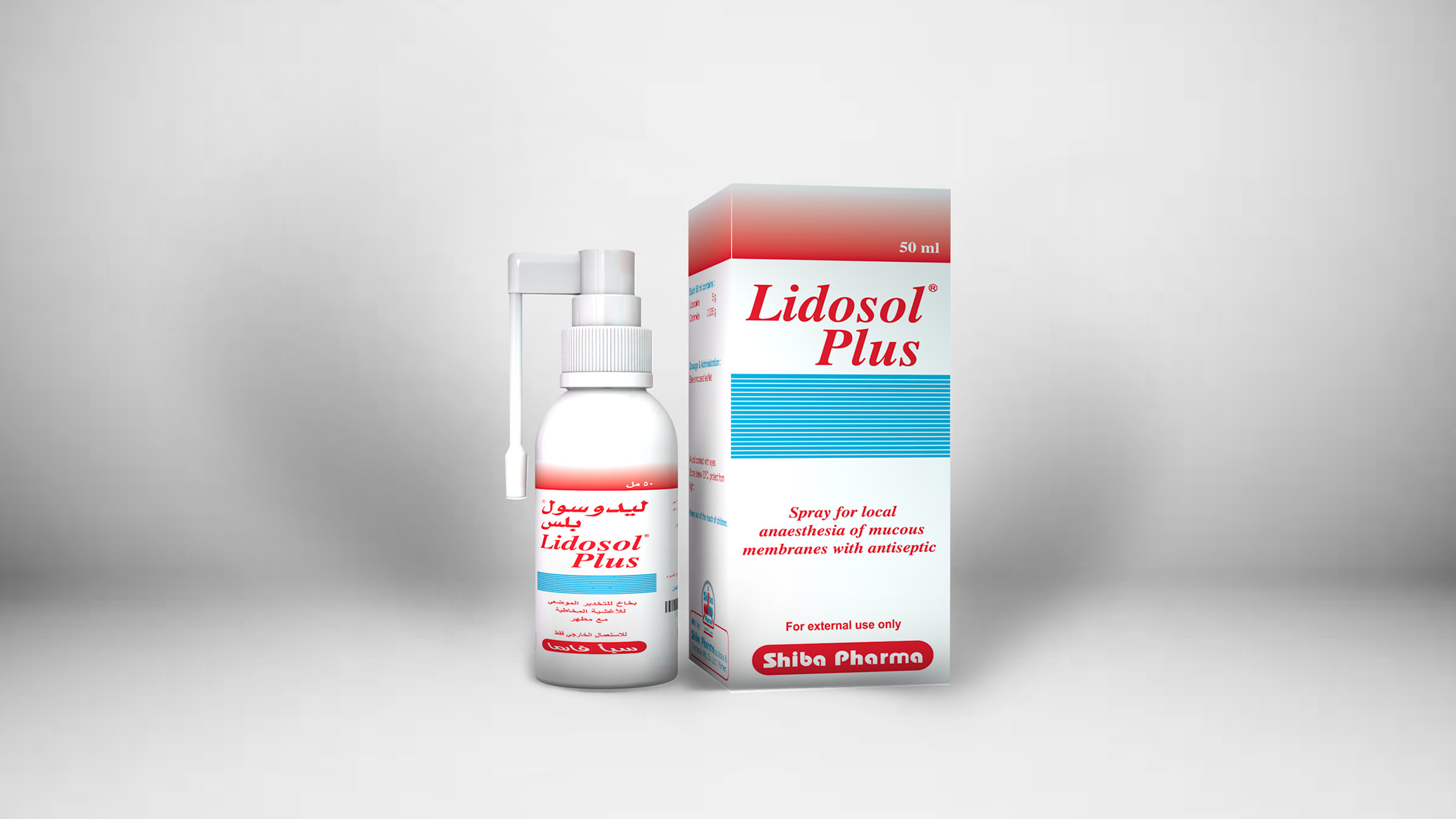
Lidosol Plus
📌 COMPOSITION
- Each dose (spray) contains: Lidocaine base 10 mg.
- Cetrimide 0.07 mg.
📌 DESCRIPTION
Lidosol Plus is a local anaesthetic and antiseptic consisting of two active substances: Lidocaine, which is used as a local anaesthetic and causes a reversible blockage of impulse propagation along nerve fibres by preventing the inward movement of sodium ions through the nerve membrane; and Cetrimide, which is used as an antiseptic due to its bactericidal activity against gram‑positive species, but it has less activity against some gram‑negative species. The onset of action occurs rapidly within 2-5 minutes, and the duration of efficacy lasts for approximately 10-20 minutes. Lidocaine is metabolised mainly in the liver and is excreted by the kidneys. Cetrimide penetrates into the superficial layer of the epidermis; although its absorption through the gastrointestinal tract is poor, more than 90% of the dose ingested is excreted in the faeces.
📌 INDICATIONS
Lidosol Plus is a topical anaesthetic and antiseptic used in adults and children above 4 years for the prevention of pain associated with the following cases:
- Minor surgical procedures in the oral cavity, such as opening of superficial abscesses.
- Introduction of tubes and catheters during endotracheal intubation and endoscopic procedures of the respiratory and digestive tract, as anaesthetic for mucous membrane in the mouth.
- Extraction of deciduous and loose teeth and loose root fragments, before injection, fitting of crown rings, bridges, bands and dentures.
- To control nausea during taking dental impressions or X‑ray photography.
📌 DOSAGE
1-2 doses of Lidosol Plus spray is usually sufficient to achieve anaesthesia on a particular site. The application of one dose may be repeated in 4 or 5 different areas of the buccal mucosa.
📌 RESTRICTIONS ON USE
Contraindications
- Hypersensitivity to the ingredients of the product or other local anaesthetics of the amide type.
Precautions
- Patients with wounds or traumatised mucosa in the region of the proposed application.
- Patients with cardiovascular diseases and heart failure, patients with epilepsy, the elderly and patients in poor general health.
- Patients with advanced liver disease or severe renal dysfunction.
- Avoid contact with eyes.
Effect on ability to drive and use machines
Depending on the dose, lidocaine may have a very mild effect on mental function and may temporarily impair locomotion and coordination.
Use in Pregnancy and Lactation
The safety of lidocaine for use during pregnancy has not been fully established. It should be used with caution and under physician supervision, especially in the early stages of pregnancy. It should be used with caution for nursing mothers if the expected benefit is greater than the risk.
📌 DRUG INTERACTIONS
- Lidosol Plus should be used with caution in patients receiving agents structurally related to local anaesthetics such as tocainide and antiarrhythmic drugs.
- Concurrent use of lidocaine with beta‑adrenergic blocking agents may slow the metabolism of lidocaine, and its use with cimetidine may inhibit the hepatic metabolism of lidocaine, leading to an increased risk of lidocaine toxicity, particularly with large doses or repeated administration.
📌 ADVERSE EFFECTS
Some adverse effects resulting from the administration of lidocaine, such as local irritation at the application site and allergic reactions, may occur. Reversible symptoms such as sore throat, hoarseness and loss of voice may occur after application to the laryngeal mucosa.
📌 OVERDOSAGE
Symptoms: The symptoms of overdose may occur due to an increase in the level of lidocaine in the blood, particularly with large doses or repeated administration, consequently increasing the risk of lidocaine toxicity. Toxic reactions involve the central nervous system and cardiovascular system. The first symptoms of CNS are nervousness, dizziness, blurred vision and tremors, followed by drowsiness, convulsions, unconsciousness, and possibly respiratory arrest may occur. Cardiovascular symptoms such as hypotension, bradycardia and possibly cardiac arrest.
Management of overdosage: The patient must be given oxygen and an anticonvulsant IV if the convulsions do not stop spontaneously, such as diazepam or thiopentone. If cardiovascular depression is evident, ephedrine should be given.
📌 STORAGE INSTRUCTIONS
Store below 30°C, protect from light.
📌 PHARMACEUTICAL FORMS
- Lidosol Plus Spray: Bottle of 50 ml.