
Section :
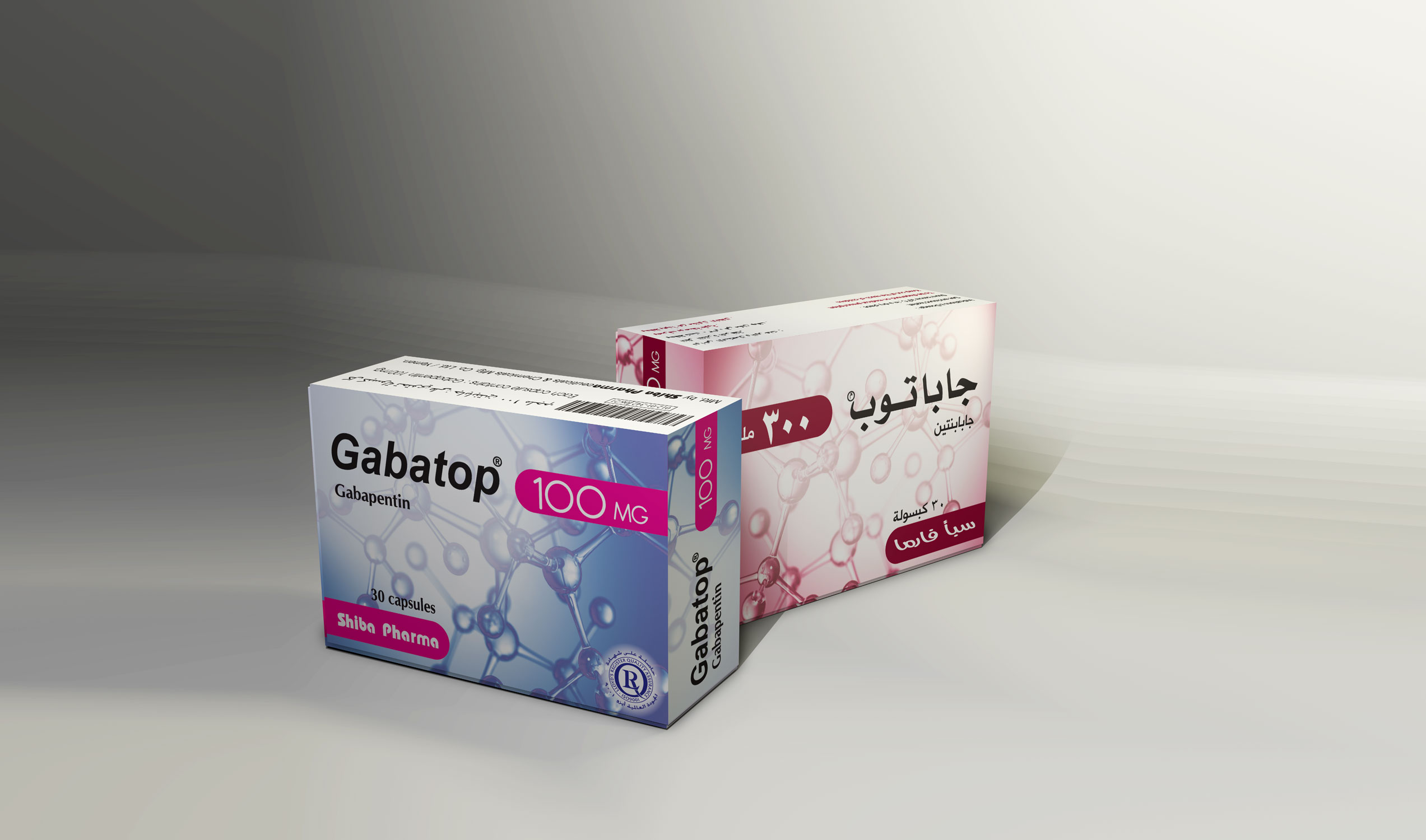
Gabatop
📌 COMPOSITION
- Each capsule contains: Gabapentin 100 mg, 300 mg, 400 mg.
📌 DESCRIPTION
Gabatop (Gabapentin) belongs to a group of anticonvulsant medicines used to treat epilepsy and peripheral neuropathic pain (long‑term pain from nerve damage, such as diabetic neuropathy and post‑herpetic neuralgia), by binding to the alpha-2-delta-1 (α2δ-1) subunit of the calcium channel in the brain, which plays a role in neurotransmitter release. This binding leads to a reduction in the release of neurotransmitters that stimulate the central nervous system and decreases seizure occurrence. Gabatop may also act on the supra‑spinal region to stimulate noradrenaline‑mediated descending inhibition, which contributes to its anti‑hypersensitivity action in neuropathic pain.
📌 INDICATIONS
- Adjunctive therapy in the treatment of partial‑onset seizures, with and without secondary generalisation.
- Treatment of peripheral neuropathic pain such as painful diabetic neuropathy and post‑herpetic neuralgia in adults.
📌 DOSAGE & ADMINISTRATION
Gabatop can be taken with or without food.
Epilepsy with Partial‑Onset Seizures:
- Patients 12 years and over: Starting dose is 300 mg three times daily, can be increased up to 600 mg three times daily.
- Patients 3-12 years: Initial dose 10-15 mg/kg/day orally divided every 8 hours initially; titrate up in approximately 3 days to the effective maintenance dose.
- Patients 3-4 years: Maintenance dose 40 mg/kg/day orally divided every 8 hours.
- Patients 5-12 years: Maintenance dose 25-35 mg/kg/day orally divided every 8 hours.
Peripheral Neuropathic Pain:
- Adults: On the first day, 300 mg once; on the second day, 300 mg twice; on the third day, 300 mg three times. Alternatively, the starting dose is 900 mg/day given as three equally divided doses. Thereafter, based on individual patient response and tolerability, the dose can be further increased by 300 mg/day every 2-3 days up to a maximum dose of 3600 mg/day. Slower titration of gabapentin dosage may be appropriate for individual patients.
- The maximum time to reach a dose of 1800 mg/day is one week; to reach 2400 mg/day is a total of 2 weeks; and to reach 3600 mg/day is a total of 3 weeks.
- In the treatment of peripheral neuropathic pain such as painful diabetic neuropathy and post‑herpetic neuralgia, efficacy and safety have not been examined in clinical studies for treatment periods longer than 5 months. The treating physician should assess the patient's clinical status and determine the need for additional therapy.
Patients with Renal Impairment: Because elderly patients are more likely to have decreased renal function, care should be taken in dose selection, and the dose should be adjusted based on creatinine clearance rate in these patients as follows:
(a) The total daily dose should be administered as three divided doses. Reduce the dose for patients with renal impairment (creatinine clearance < 79 ml/min).
(b) The 150 mg daily dose is to be administered as 300 mg every other day.
(c) For patients with creatinine clearance < 15 ml/min, the daily dose should be reduced in proportion to creatinine clearance (e.g., patients with a creatinine clearance of 7.5 ml/min should receive one‑half the daily dose that patients with a creatinine clearance of 15 ml/min receive).
Note: If Gabatop has to be discontinued, it is recommended that this should be done gradually over a minimum of one week.
📌 RESTRICTIONS ON USE
Contraindications
Hypersensitivity to gabapentin.
Precautions
- Antiepileptic drugs should not be abruptly discontinued because of the possibility of increasing seizure frequency.
- Antiepileptic drugs, including Gabatop, increase the risk of suicidal thoughts or behaviour in patients taking these drugs. Patients should be monitored for the emergence or worsening of the following symptoms: depression, suicidal thoughts or behaviour, and/or any unusual changes in mood or behaviour.
- Haemodialysis patients should tell the doctor if they develop muscle pain and/or weakness.
- Patients with persistent stomach pain or feeling sick should consult the doctor immediately, as these may be symptoms of acute pancreatitis.
- Caution should be taken in patients with a history of abuse, kidney problems, nervous system disorders, respiratory disorders, elderly patients over 65 years of age, and patients with different types of seizures including absence seizures.
Effect on the ability to drive vehicles and use machines
Gabatop may cause dizziness, drowsiness or tiredness. If this happens, do not drive or use machines.
Use in Pregnancy and Lactation
Gabatop should not be taken during pregnancy or lactation unless advised by a doctor.
📌 DRUG INTERACTIONS
- Gabatop is not expected to interact with other antiepileptic drugs or oral contraceptive pills.
- Opioids (such as morphine) may increase the effect of Gabatop.
- Antacids containing aluminium and magnesium reduce the absorption of Gabatop from the stomach. It is therefore recommended that antacids be taken 2 hours after taking Gabatop.
- If the patient has to undergo a urine test, the physician or hospital should be informed that the patient is taking Gabatop, as it may interfere with some laboratory tests.
📌 ADVERSE EFFECTS
Like all medicines, Gabatop may cause side effects, although not everybody gets them.
- Very common: Viral infection, feeling drowsy, dizziness, feeling tired, fever.
- Common: Pneumonia, respiratory infections, urinary tract infection, inflammation of the ear or other infections, low white blood cell counts, increased appetite, confusion, mood changes, depression, anxiety, nervousness, convulsions, difficulty with thinking and speaking, loss of memory, tremor, difficulty sleeping, headache, sensitive skin, numbness, unusual eye movement, increased, decreased or absent reflexes, blurred vision, high blood pressure, flushing or dilation of blood vessels, difficulty breathing, sore throat, cough, dry nose, vomiting, nausea, diarrhoea, stomach pain, indigestion, constipation, dry mouth or throat, facial swelling, bruises, rash, itch, acne, joint and muscle pain, back pain, swelling in the legs and arms, difficulty with walking.
📌 OVERDOSAGE
Acute, life‑threatening toxicity has not been observed with gabapentin overdoses of up to 49 g.
Symptoms: Dizziness, blurred vision, slurred speech, drowsiness and mild diarrhoea. Overdoses of gabapentin, particularly in combination with another CNS depressant, may result in coma.
Treatment: All patients recovered fully with supportive care and reduced absorption of gabapentin. Although gabapentin can be removed by haemodialysis, it is not usually required. However, in a patient with severe renal impairment, haemodialysis may be indicated.
📌 STORAGE INSTRUCTIONS
Store below 30°C in a dry place.
📌 PHARMACEUTICAL FORMS
- Gabatop 100, 300, 400 Capsules: Pack of different sizes.