
Section :
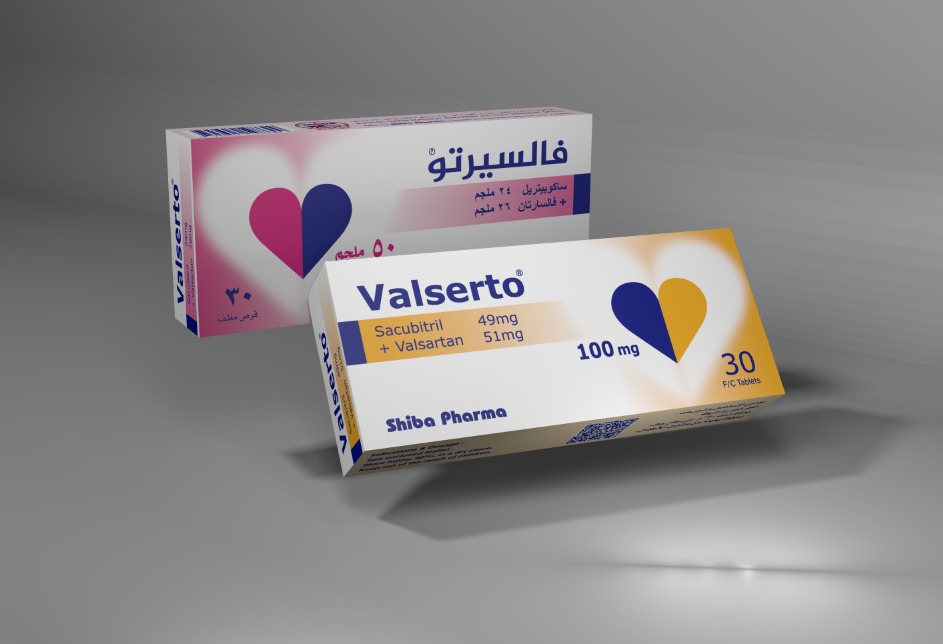
Valserto
📌 COMPOSITION
Each F/C tablet of Valserto 50 contains: 24 mg sacubitril and 26 mg valsartan.
Each F/C tablet of Valserto 100 contains: 49 mg sacubitril and 51 mg valsartan.
📌 DESCRIPTION
Valserto is an angiotensin receptor neprilysin inhibitor (ARNI) used to treat long‑term heart failure in adults. It combines sacubitril (a neprilysin inhibitor) and valsartan (an angiotensin II receptor blocker or ARB). Valserto is typically used alongside other heart failure therapies, replacing an angiotensin‑converting enzyme (ACE) inhibitor or another ARB. It helps relax blood vessels, reduces water retention and improves heart failure symptoms.
📌 INDICATION
- Valserto is prescribed in adult patients for the treatment of symptomatic chronic heart failure with reduced ejection fraction.
- Valserto is prescribed in children and adolescents aged one year or older for the treatment of symptomatic chronic heart failure with left ventricular systolic dysfunction.
📌 DOSAGE & ADMINISTRATION
- Follow your doctor’s instructions for taking Valserto.
- Take Valserto twice daily. Your doctor may adjust the dosage during treatment.
The recommended dose for adults and pediatric patients aged one year and older:
- Adjust adult doses every 2 to 4 weeks and pediatric doses every 2 weeks to reach the target maintenance dose.
Notes:
- Reduce starting dose to half the usually recommended starting dosage for:
- Patients not currently taking an ACE inhibitor or ARB or previously taking a low dose of these agents.
- Patients with severe renal impairment.
- Patients with moderate hepatic impairment.
- If you were taking angiotensin‑converting enzyme inhibitors or angiotensin II receptor blockers previously, wait 36 hours after your last dose before taking Valserto.
- Do not exceed the recommended dosage.
- Continue taking Valserto as directed by your doctor. Do not stop without consulting your doctor.
- If you miss a dose, take it as soon as you remember, unless it’s close to your next dose. In that case, skip the missed dose and take the next one at the regular time.
- If you take too much Valserto, contact your doctor immediately.
- Valserto can be taken with or without food.
- Do not break or divide the coated tablet.
📌 RESTRICTION ON USE
Contraindications
Don’t take Valserto if:
- You have a known hypersensitivity to sacubitril or valsartan.
- You have certain medical conditions, including a single kidney with a narrowed or constricted renal artery, low potassium or sodium levels, high calcium levels despite treatment, porphyria, aortic valve narrowing, hypertrophic obstructive cardiomyopathy, angioedema, severe liver disease, or severe kidney dysfunction.
- You are taking ACE inhibitors or ARBs (wait 36 hours after your last dose before starting Valserto).
- You have previously experienced angioedema when taking an ACE inhibitor or ARB.
- You have diabetes or impaired kidney function and are being treated with a blood pressure‑lowering medication containing aliskiren.
- You are pregnant or planning to become pregnant.
- You are using lithium or potassium‑sparing diuretics like spironolactone, triamterene, or amiloride.
Precautions
Inform your doctor, pharmacist, or healthcare provider before taking Valserto if:
- You have severe kidney disease or a narrowed kidney artery.
- You have experienced angioedema in the past.
- You experience low blood pressure, or you are currently using medications that help reduce your blood pressure.
- You are taking medications that increase potassium levels in the blood.
- You have liver disease.
- You experience hallucinations, paranoia, or changes in sleep patterns.
- You are suffering from dehydration, vomiting, or diarrhoea, particularly if you are 65 years old or older, have kidney disease, or have low blood pressure.
Use in Pregnancy & Lactation
- Consult your healthcare provider before taking Valserto if you are pregnant or breastfeeding.
- Do not take Valserto if you are pregnant.
- Breastfeeding is not recommended during treatment.
- Women of childbearing age should use effective contraception while taking Valserto.
Effect on ability to drive or use machines
Ensure you know how Valserto affects you before driving, using tools, operating machinery, or engaging in activities requiring concentration. If you feel dizzy or very tired while taking Valserto, avoid driving, cycling, or using tools or machinery.
📌 DRUG INTERACTIONS
Inform your doctor, pharmacist, or healthcare provider of all medications you are taking, including over‑the‑counter medications, as they may interact with Valserto. In particular, do not take Valserto with:
- ACE inhibitors or ARBs (wait 36 hours after your last dose before starting Valserto), as they may increase the risk of angioedema.
- Statins (e.g., atorvastatin), sildenafil, rifampicin, ciclosporin, aliskiren, lithium, furosemide, ritonavir, nitroglycerin, metformin, or potassium‑increasing medications (such as potassium‑sparing diuretics, potassium supplements, salt substitutes).
- Non‑steroidal anti‑inflammatory medicines (NSAIDs) or selective cyclooxygenase‑2 inhibitors (COX‑2 inhibitors). Your doctor may monitor your kidney function and blood pressure when starting or adjusting treatment with these medications.
📌 ADVERSE EFFECTS
- Seek immediate medical attention if you experience symptoms of an allergic reaction (angioedema) such as swelling of the face, tongue, or throat, difficulty swallowing, hives, or difficulty breathing.
- Frequent side effects include: hypotension, hyperkalaemia, cough, dizziness and renal failure.
- Less frequent side effects include: angioedema.
- Report any unlisted side effects to your doctor or pharmacist.
📌 STORAGE INSTRUCTIONS
Store below 30°C in a dry place.
📌 PRESENTATIONS
- Valserto 50 F/C tablets: Pack of 3×10 tablets, Alu‑Alu blister.
- Valserto 100 F/C tablets: Pack of 3×10 tablets, Alu‑Alu blister.