
Section :
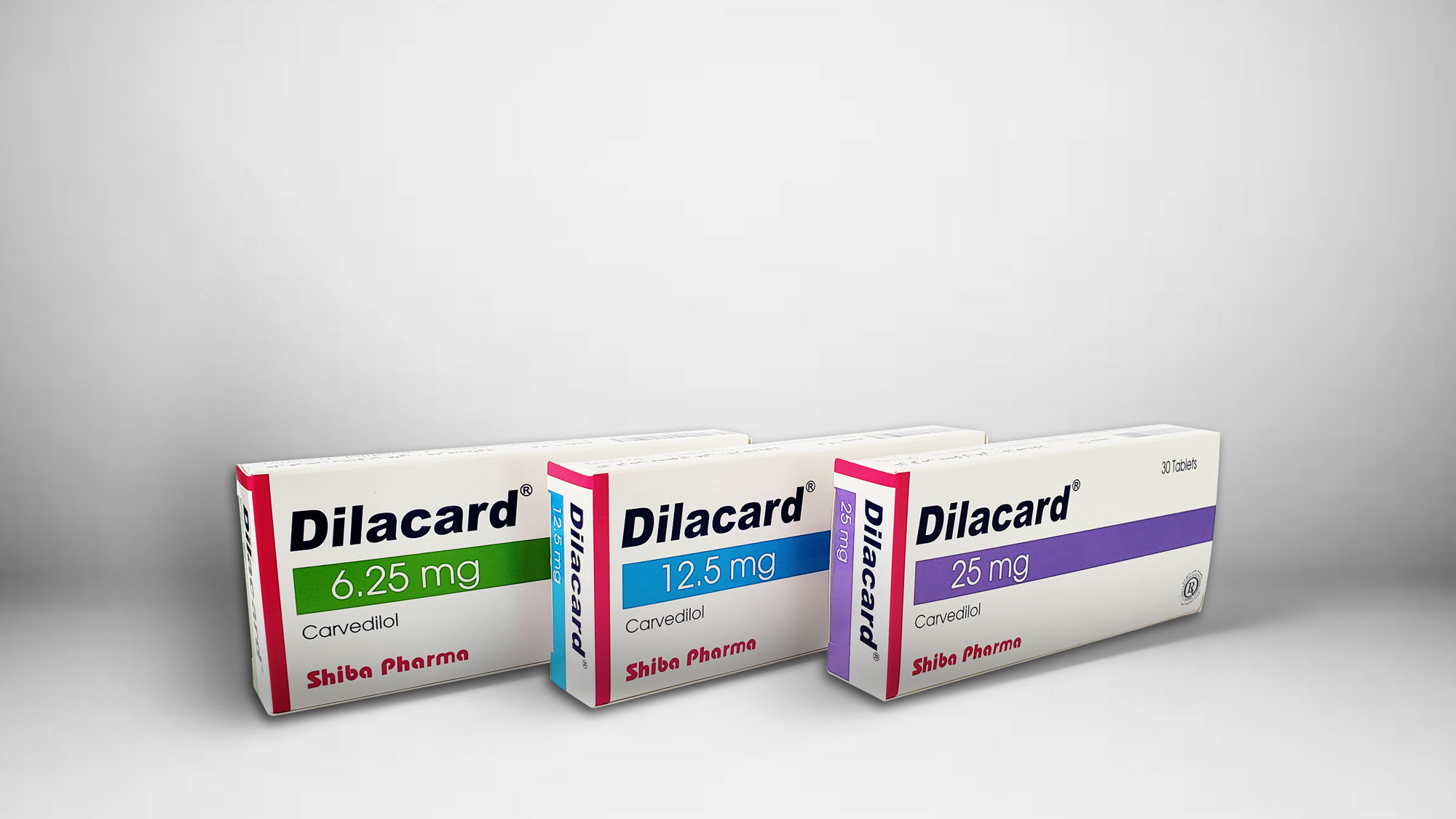
Dilacard
📌 COMPOSITION
Each tablet contains: Carvedilol 6.25, 12.5 and 25 mg.
📌 DESCRIPTION
Dilacard (Carvedilol) is a third‑generation dual‑action cardiovascular agent that has non‑selective beta‑blocking with alpha‑1 blocking activity and vasodilating properties. By blocking the receptors, Dilacard reduces heart rate and force of contraction, thereby reducing the heart's effort. It also blocks adrenergic receptors on arteries, causing them to relax and leading to a fall in blood pressure. Dilacard is rapidly absorbed after oral administration; it is extensively metabolised in the liver, and its average elimination half‑life is 6 hours, while excretion is via the bile or faeces.
📌 INDICATIONS
- Essential hypertension.
- Chronic stable angina pectoris.
- Chronic heart failure.
📌 DOSAGE & ADMINISTRATION
Essential hypertension
- Adults: The usual starting dose is 12.5 mg once a day for the first two days, then the dose is increased to 25 mg/day. If the effect is inadequate, the dose may be increased every 14 days to 50 mg twice daily as a maximum dose.
- Elderly: The usual starting dose is 12.5 mg once a day and may be sufficient for continued treatment. In some cases it may be increased to 25 mg or 50 mg per day as a maximum dose every 2 weeks.
Chronic stable angina pectoris
- Adults: The usual starting dose is 12.5 mg twice a day for the first two days, then the dose is increased to 25 mg twice a day. If the effect is inadequate, the dose may be increased after 14 days to 50 mg twice daily.
- Elderly: The usual starting dose is 12.5 mg twice daily for the first two days, then the dose is increased to 25 mg twice a day as a maximum daily dose.
Chronic heart failure
Dilacard should always be used with standard treatment for heart failure such as diuretics, digitalis, ACE inhibitors and other vasodilators. The dosage of the standard therapy must be stable for at least 4 weeks before starting to use Dilacard.
- The usual starting dose is 3.125 mg twice daily for two weeks. If it is well tolerated, it should be increased to 6.25 mg twice daily. Dosing should then be doubled every two weeks to the highest level tolerated by the patient.
- Patients who weigh under 85 kg: the dose should not exceed 25 mg twice daily. Patients who weigh over 85 kg: the dose may be increased with caution to 50 mg twice daily.
📌 RESTRICTIONS ON USE
Contraindications
- Hypersensitivity to Carvedilol.
- Low blood pressure.
- Myocardial insufficiency.
- Bradycardia.
- Sick sinus syndrome.
- Bronchial asthma or other respiratory diseases.
- Untreated phaeochromocytoma.
- Metabolic acidosis.
- Cardiogenic shock.
- Severely impaired liver function.
- Certain disturbances of stimulus formation and conduction in the heart.
- Prinzmetal's angina.
Precautions
- Caution should be observed because Dilacard masks the signs and symptoms of acute hypoglycaemia and thyrotoxicosis.
- Blood pressure and ECG should be monitored when Dilacard is taken with a calcium channel blocker.
- Patients should avoid contact lenses because Dilacard leads to a reduction of lacrimal fluid secretion.
- Used with caution in patients with peripheral vascular diseases.
- Dilacard should not be administered to patients with secondary hypertension, orthostatic hypotension or acute inflammatory heart disease.
- Dilacard should not be administered to patients with phaeochromocytoma as a first‑line treatment.
- Do not stop using Dilacard suddenly. Discontinuation must be gradual over a week to two weeks, as an angina pectoris attack may occur.
Use in Pregnancy and Lactation
Dilacard tablets are not recommended during pregnancy or breast‑feeding. It could be used during pregnancy only after careful consideration of risks and benefits. Because Carvedilol and its metabolites are excreted in breast milk, nursing mothers must stop breast‑feeding during the treatment.
📌 DRUG INTERACTIONS
The following points should be observed when this medication is used concomitantly with other drugs:
- Concomitant use of Carvedilol and digoxin increases serum digoxin levels, which leads to a greater decrease in heart rate.
- There may be an increase in the effect of other antihypertensive agents or drugs that can cause a fall in blood pressure, such as certain sedatives, antidepressants, vasodilators and alcohol.
- Concomitant use of Carvedilol with certain anaesthetic or narcotic drugs affects heart function and blood pressure‑lowering action.
- The action of insulin and antihyperglycaemic drugs may be potentiated, and they may mask or weaken the signs of low blood glucose when used concomitantly with Carvedilol.
- When Carvedilol is administered with a calcium channel blocker or other antiarrhythmic drugs, the cardiodepressive action may be increased.
- Concomitant use of cimetidine and hydralazine with Carvedilol increases the systemic availability of Carvedilol.
- Cyclooxygenase inhibitors weaken the antihypertensive effect of Carvedilol.
- Concomitant use of reserpine, methyldopa, clonidine, guanfacine and guanethidine causes additional slowing of heart rate when used with Carvedilol.
- Rifampicin reduces Carvedilol's action.
📌 ADVERSE EFFECTS
Dilacard is mostly well endured, yet as with any other medicine, it may have some side effects that do not occur to everyone.
The most common adverse effects: Fatigue, bradycardia, orthostatic hypotension, weight gain, nausea, vomiting, diarrhoea, headache, dizziness, dyspepsia and anaemia.
Mild adverse effects, occurring occasionally and early in the course of treatment: Diminished peripheral circulation, lacrimation decrease and flu‑like symptoms.
Rare adverse effects: AV block or increases in symptoms of intermittent claudication may occur.
📌 OVERDOSAGE
Overdosage may cause severe hypotension, bradycardia, cardiac insufficiency, shock and cardiac arrest. Respiratory problems, bronchospasm, vomiting, lapses of consciousness and generalised seizures may also occur. The patient should be placed in a supine position, kept under observation and treated under intensive‑care conditions. Gastric lavage or pharmacologically induced emesis may be used shortly after ingestion.
📌 STORAGE INSTRUCTIONS
Store below 30°C.
📌 PHARMACEUTICAL FORMS
- Dilacard 6.25 mg tablets: pack of 30 tablets and hospital packs of different sizes.
- Dilacard 12.5 mg tablets: pack of 30 tablets and hospital packs of different sizes.
- Dilacard 25 mg tablets: pack of 30 tablets and hospital packs of different sizes.