
Section :
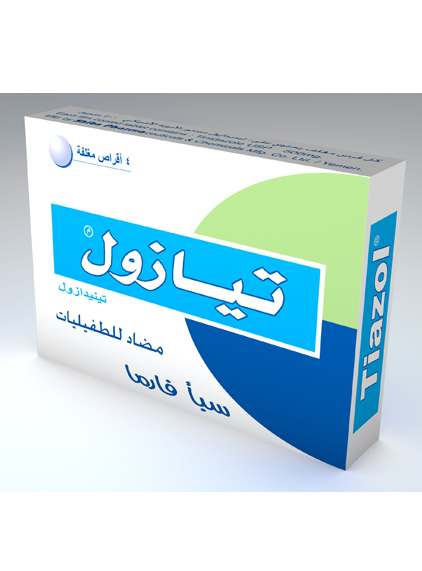
Tiazol
📌 COMPOSITION
Each film‑coated tablet contains: Tinidazole USP 500 mg.
📌 DESCRIPTION
Tiazol (Tinidazole) is a 5-nitroimidazole derivative. It has antimicrobial and antiprotozoal activity against anaerobic bacteria. It is used in the treatment of infections due to Trichomonas vaginalis, Entamoeba histolytica, Giardia lamblia, and sensitive obligate anaerobic bacteria, such as Bacteroides fragilis, Bacteroides spp., Fusobacteria spp., Peptococcus spp., Peptostreptococcus spp., Clostridium spp., Eubacteria spp., and Veillonella spp. It is also active in vitro against Gardnerella vaginalis. Tinidazole is completely absorbed following oral administration, a peak plasma concentration of about 40 μg/ml is achieved 2 hours after a single 2 g dose, falling to about 10 μg/ml at 24 hours and 2.5 μg/ml at 48 hours; concentrations above 8 μg/ml are maintained by daily maintenance doses of 1 g. The plasma elimination half‑life is 12-14 hours. Tinidazole is widely distributed in a variety of body tissues, bile, breast milk, cerebrospinal fluid, saliva, and crosses the placenta. Only 12% is reported to be bound to plasma proteins. Unchanged drug and metabolites are excreted in the urine.
📌 INDICATIONS
Tiazol is used in the treatment of:
- Genitourinary tract infections due to Trichomonas vaginalis in males and females.
- Vaginitis due to Gardnerella vaginalis.
- Intestinal and liver infections due to Entamoeba histolytica and intestinal infections due to Giardia lamblia.
- Infections due to anaerobes including Bacteroides fragilis, other species of Bacteroides and Fusobacteria spp., especially in patients with such conditions as sepsis, chronic sinusitis, pneumonia, empyema, pulmonary abscess, osteomyelitis, septic abortion, peritonitis, postoperative abdominal infections, cellulitis and postoperative parietal infections.
📌 DOSAGE AND ADMINISTRATION
Tiazol is usually administered as a single daily dose by mouth with or after food.
| Indications | Dosage - Adults | Dosage - Children (more than 12 years) |
|---|---|---|
| Vaginitis due to Gardnerella vaginalis | 2 g (4 tablets) as a single dose for one day or for 2 days if needed. | 50-75 mg/kg as a single dose for one day (and repeat once as needed). |
| Urogenital trichomoniasis in male and female | 2 g (4 tablets) as a single dose for one day. | 50-75 mg/kg as a single dose for one day (and repeat once as needed). |
| Acute amoebic dysentery | 2 g (4 tablets) for 2-3 days, up to 6 days as needed. | 50-60 mg/kg for 3 days. |
| Hepatic amoebiasis | 1.5-2 g (3-4 tablets) for 3 days, up to 6 days as needed. | 50-60 mg/kg for 5 days. |
| Giardiasis | 2 g (4 tablets) as a single dose for one day. | 50-75 mg/kg as a single dose for one day (and repeat once as needed). |
| Anaerobic infections | 2 g (4 tablets) as initial dose in the first day, followed by 1 g (2 tablets) for 4-5 days. | — |
📌 RESTRICTIONS ON USE
Contraindications
- In patients with known hypersensitivity to the drug.
- In patients having a history of or with blood dyscrasias.
- In patients with an organic neurological disease.
Precautions
Tinidazole has been associated with neurological disturbances such as dizziness, vertigo, incoordination, ataxia, peripheral neuropathy and convulsions. If any of these signs appear during therapy, the drug should be discontinued.
Use in pregnancy and lactation
Tinidazole should not be given during the first trimester of pregnancy. It could be used in the second and third trimesters when the benefits of therapy outweigh the possible risks to both mother and fetus. Tinidazole is contraindicated during lactation, and if no alternative exists, then lactation should be discontinued.
📌 DRUG INTERACTIONS
- Acute psychoses or confusion have been associated with the concomitant use of Tinidazole and alcohol (disulfiram‑like reaction).
- It may potentiate the effects of coumarin anticoagulants.
📌 ADVERSE REACTIONS
- Mild gastrointestinal disturbances including: anorexia, nausea, metallic taste, vomiting and diarrhoea.
- Neurological disturbances including: dizziness, vertigo, ataxia, peripheral neuropathy and rarely convulsions.
- Rarely allergic reactions including: skin rash, urticaria, pruritus and angioneurotic oedema.
- Transient leucopenia.
- Overgrowth of candida in the vagina.
- Rarely other side effects: headache, tiredness, furry tongue and dark urine.
📌 STORAGE INSTRUCTIONS
Store below 30°C in a dry place.
📌 PHARMACEUTICAL FORMS
- Tiazol Tablets: Pack of 4 tablets and hospital packs of different sizes.