
Section :
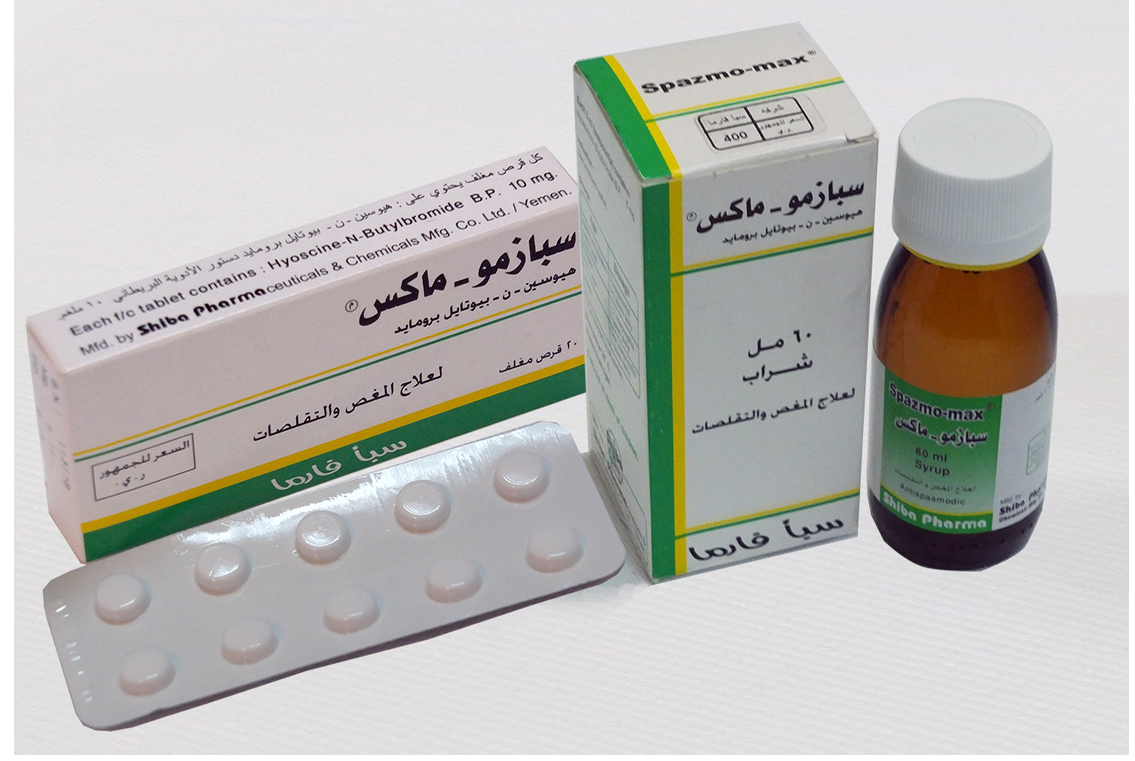
Spazmo-max
📌 COMPOSITION
- Each F/C Tablet contains: Hyoscine‑N‑butylbromide B.P. 10 mg.
- Each 5 ml (teaspoonful) contains: Hyoscine‑N‑butylbromide B.P. 5 mg.
📌 DESCRIPTION
Spazmo‑max (Hyoscine‑N‑butylbromide) is a quaternary ammonium derivative. It exerts a specific and potent antispasmodic action on the smooth muscles of the gastrointestinal, biliary and urinary tracts. It does not pass the blood‑brain barrier. Therefore, anticholinergic side effects on the central nervous system do not occur. Its binding to plasma proteins is low, and approximately half of the clearance is renal.
📌 INDICATIONS
Spazmo‑max is indicated in the treatment of:
- Gastrointestinal spasm and hypermotility.
- Irritable bowel syndrome and spastic colon.
- Biliary colics and cholelithiasis.
- Renal colics and urolithiasis.
- Dysmenorrhoea and nocturnal enuresis.
- Peptic ulcer (in conjunction with antacid or histamine H2‑antagonist).
📌 DOSAGE & ADMINISTRATION
- Adults and children over 6 years: 1-2 tablets or 2 teaspoonfuls 3-5 times daily.
- Children over one year: 1-2 teaspoonfuls 3 times daily.
- Infants: One teaspoonful 3 times daily.
📌 RESTRICTIONS ON USE
Contraindications
- In patients with hypersensitivity to Hyoscine‑N‑butylbromide.
- In patients with myasthenia gravis and megacolon.
Use in pregnancy and lactation
Caution should be exercised when using Hyoscine‑N‑butylbromide in pregnancy, especially during the first trimester. The safety of its use during lactation has not yet been established.
Precautions
Caution is recommended when Hyoscine‑N‑butylbromide is given to patients having narrow‑angle glaucoma, prostatic enlargement, cardiac disorders, mechanical stenosis in the gastrointestinal tract, urinary outlet obstruction, hepatic and renal function impairment, and hypertension.
📌 DRUG INTERACTIONS
- The anticholinergic effect of tricyclic antidepressants, antihistamines, Quinidine, Amantadine and Disopyramide may be intensified by Hyoscine‑N‑butylbromide.
- Concomitant treatment with dopamine antagonists such as Metoclopramide may result in diminution of the effect of both drugs on the gastrointestinal tract.
- Tachycardic effects of beta‑adrenergic agents may be enhanced by Hyoscine‑N‑butylbromide.
- Antacids and antidiarrhoeals may reduce absorption of anticholinergics. Doses should be spaced 2 to 3 hours apart.
📌 ADVERSE EFFECTS
Adverse effects of Hyoscine‑N‑butylbromide are generally mild and self‑limiting, such as constipation, drowsiness and dryness of the mouth, throat, nose and skin. Tachycardia and urinary retention may occur.
📌 STORAGE INSTRUCTIONS
- Tablets: Store between 15-25°C in a dry place. Protect from light.
- Syrup: Store at 25°C, protect from light.
📌 PHARMACEUTICAL FORMS
- Spazmo‑max Tablets: Pack of 10 and 20 tablets and hospital packs of different sizes.
- Spazmo‑max Syrup: Pack of 60 ml.