
Section :
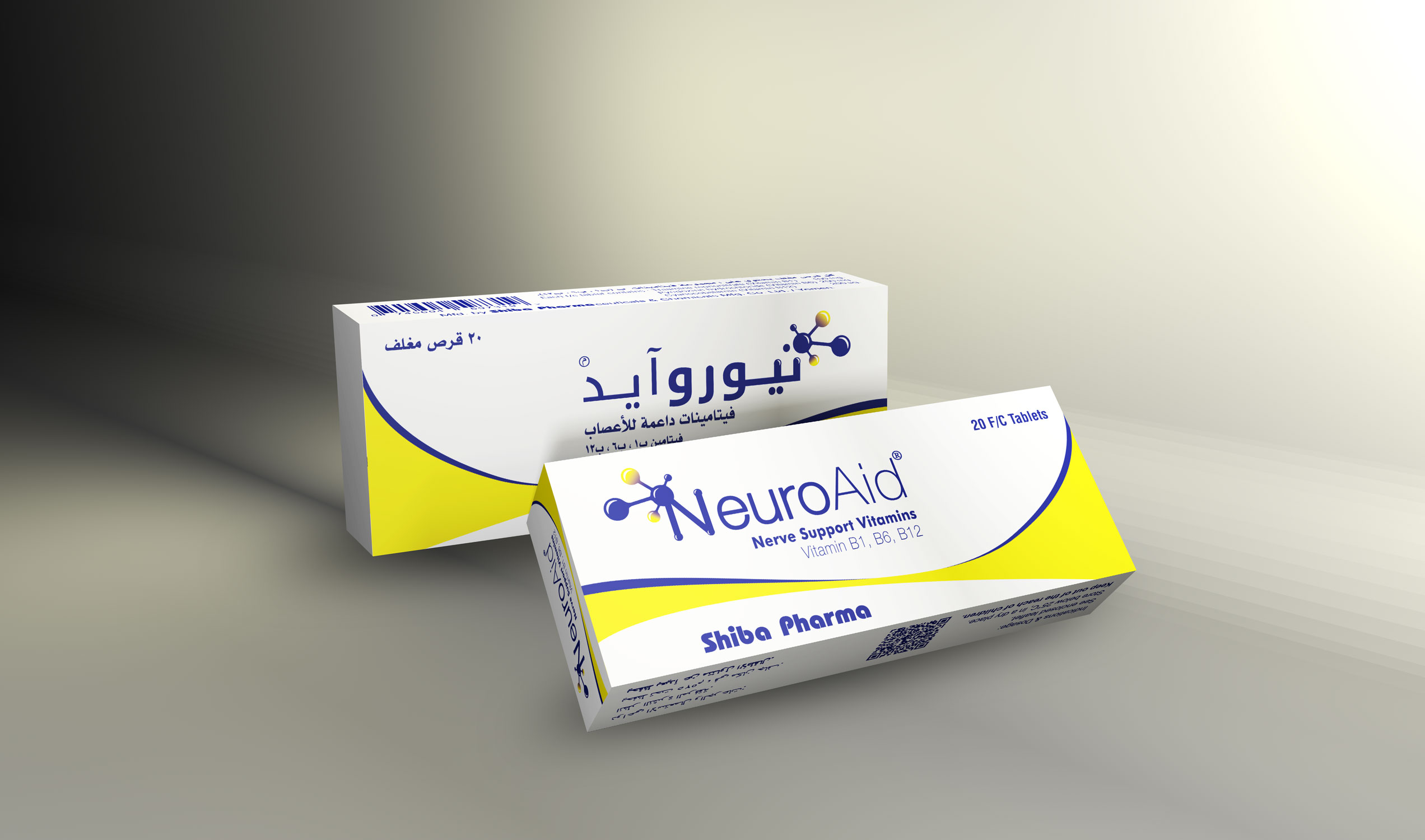
Neuroaid
📌 COMPOSITION
Each F/C tablet contains: Thiamine mononitrate (vitamin B1) 100 mg
Pyridoxine HCl (vitamin B6) 200 mg
Cyanocobalamin (vitamin B12) 200 µg.
📌 DESCRIPTION
NeuroAid is a combination of 3 essential neurotropic vitamins (B1, B6 and B12) in high dosage. Vitamins B1, B6 and B12 are of special importance for the metabolism in the peripheral and central nervous system. It has an effect on the regeneration of nerves. Vitamin B1 plays an important role in major metabolic processes. Vitamin B6 has an analgesic effect. Vitamin B12 ensures blood cell formation and prevents degenerative processes of the nervous system. The effect of vitamins B in diseases of the nervous system involves compensation of accompanying vitamin B deficiency and stimulation of natural healing processes in nervous tissue.
📌 INDICATIONS
For the supportive treatment of neuritis and non‑inflammatory diseases of nerves, e.g.:
- Pain and/or paralysis in the facial nerves.
- Ischialgia.
- Pain in the area of intercostal nerves, cervical vertebral column, shoulders and arms, as well as of the lumbar vertebral column and states of irritation due to disease of the vertebral column.
- Neurological and other disorders associated with disturbance of metabolic functions influenced by B‑complex vitamins, including diabetic polyneuropathy and post‑influenzal neuropathies.
📌 DOSAGE & ADMINISTRATION
- One coated tablet once daily. In individual cases, the dose may be increased to one coated tablet 3 times daily.
- The coated tablets are to be swallowed whole with plenty of liquid after meals.
Duration of administration: The physician in charge should decide on the duration of administration. After a maximum period of four weeks, it should be decided whether to reduce the dose.
📌 RESTRICTIONS ON USE
Contraindications
- Patients with known hypersensitivity to vitamin B1, B6 and/or B12.
- Children under 14 years old (due to the high content of active ingredients).
Precautions
If symptoms of peripheral sensory neuropathy (paraesthesia) occur, the dosage should be reviewed and treatment with this medicine discontinued, if necessary. Neuropathies have been observed under long‑term intake (over 6‑12 months) of daily dosages exceeding 50 mg vitamin B6 as well as in short‑term intake (over 2 months) of more than 1 g vitamin B6 per day. Therefore, regular monitoring is recommended under long‑term treatment.
Use in Pregnancy and Lactation
High concentrations of vitamin B6, i.e. > 600 mg daily, can inhibit the production of breast milk. The physician should decide about the use of this product during pregnancy and lactation after carefully weighing the risk‑to‑benefit.
Effect on the ability to drive vehicles and use machines
NeuroAid does not affect the capability to drive a vehicle or to use machines.
📌 DRUG INTERACTIONS
- Antacids diminish the absorption of thiamine.
- Loop diuretics, e.g. furosemide that inhibit tubular reabsorption may cause increased excretion of thiamine in long‑term therapy.
- L‑dopa: vitamin B6 may reduce the effect of L‑dopa.
- Pyridoxine antagonists (e.g. isoniazid, hydralazine, D‑penicillamine or cycloserine) may decrease the efficacy of vitamin B6 (pyridoxine).
- Black tea diminishes the absorption of thiamine.
📌 ADVERSE EFFECTS
- Gastrointestinal disorders: Gastrointestinal complaints such as nausea, vomiting, diarrhoea and abdominal pain.
- Immune system disorders: Very rare: hypersensitivity reactions such as sweating, tachycardia and skin reactions like itching and urticaria.
- Renal and urinary disorders: Chromaturia (“reddish urine”) appears during the first 8 hours after administration and typically resolves within 48 hours.
📌 OVERDOSE
Vitamin B1: Thiamine has a broad therapeutic range. Very high doses (over 10 g) have a ganglion‑blocking effect, similar to that of curare, and suppress the conduction of nerve impulses.
Vitamin B6: The toxic potential of vitamin B6 can be considered as very low. Long‑term intake (over 6‑12 months) of a daily dosage > 50 mg vitamin B6 may, however, cause peripheral sensory neuropathy and other sensorial neuropathy syndromes. These symptoms improve gradually upon vitamin discontinuation. Continuous intake of vitamin B6 at a daily dosage of more than 1 g over more than two months may produce neurotoxic effects. Neuropathies with ataxia and sensitivity disorders, cerebral convulsions with EEG changes as well as, in individual cases, hypochromic anaemia and seborrhoeic dermatitis have been described after administration of more than 2 g daily.
Vitamin B12: Allergic reactions, eczematous skin changes and a benign form of acne have been observed after high parenteral doses (in rare cases also after oral doses).
📌 STORAGE INSTRUCTIONS
Store below 25°C in a dry place.
📌 PHARMACEUTICAL FORMS
NeuroAid F/C tablets: pack of different sizes.