
Section :
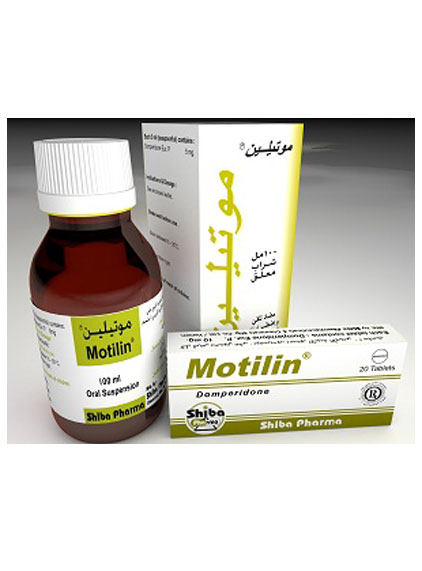
Motilin
📌 COMPOSITION
- Each tablet contains: Domperidone 10 mg.
- Each 5 ml suspension contains: Domperidone 5 mg.
- Each 1 ml suspension oral drops contains: Domperidone 1 mg.
📌 DESCRIPTION
Motilin (Domperidone) is a dopamine antagonist drug with anti‑emetic properties. Domperidone promotes the release of prolactin from the pituitary. Its anti‑emetic effect may be due to blocking peripheral dopamine receptors both in the GI wall and the chemoreceptor trigger zone, which lies outside the blood‑brain barrier. Domperidone works by helping to move food faster through the oesophagus, stomach and gut. It also prevents food from flowing back up to the oesophagus. Unlike metoclopramide and certain neuroleptic drugs, Domperidone does not cross the blood‑brain barrier and hence it does not have any side effects on the extrapyramidal region as associated with these drugs. Domperidone is rapidly absorbed after oral administration and the peak plasma levels are achieved within 1 hour. The low absolute bioavailability of the oral dose (15%) is due to extensive first‑pass metabolism in the liver by the CYP3A4 enzyme. Domperidone is (91%-93%) bound to plasma proteins and is excreted (31%) in urine and (66%) in faeces. The plasma half‑life is 7-9 hours.
📌 INDICATIONS
Motilin is indicated in the treatment of the symptoms of nausea and vomiting.
📌 DOSAGE & ADMINISTRATION
Motilin should be used at the lowest effective dose for the shortest duration necessary to control nausea and vomiting. The maximum treatment duration should not exceed one week. It is recommended to take Motilin 15 to 30 minutes before meals. If taken after meals, absorption of the drug is somewhat delayed. If a dose is missed, it should not be doubled to compensate for the missed dose.
- Adults and adolescents ≥ 12 years and weighing ≥ 35 kg: 1 tablet or 10 ml of oral suspension up to 3 times per day, with a maximum dose of 30 mg per day.
- Infants and children < 12 years and weighing < 35 kg: 0.25 mg/kg 3 times a day.
- Patients with renal impairment: The dosing frequency should be reduced to once or twice per day according to the severity of impairment.
📌 RESTRICTIONS ON USE
Contraindications
- Known hypersensitivity to Domperidone.
- Prolactin‑releasing pituitary tumour.
- Gastro‑intestinal haemorrhage, obstruction or perforation.
- Patients with moderate or severe hepatic impairment.
- Patients who have known existing prolongation of QTc intervals, patients with significant electrolyte disturbances (hypokalaemia, hyperkalaemia, hypomagnesaemia) or congestive heart failure due to increased risk of ventricular arrhythmia. A higher risk was observed in patients older than 60 years, patients taking daily doses greater than 30 mg, and patients concurrently taking QTc‑prolonging drugs or CYP3A4 inhibitors.
Precautions
- Caution should be taken in patients with kidney problems.
Effect on the ability to drive vehicles and use machines
Dizziness and somnolence have been observed following use of Domperidone, so caution should be taken.
Use in pregnancy and lactation
There are no well‑adequate studies on pregnant women, so Motilin should be avoided during pregnancy unless necessary and under physician supervision. Motilin is excreted in breast milk, so it is not recommended to be used during lactation unless necessary and under physician supervision.
📌 DRUG INTERACTIONS
- Concomitant administration of anti‑cholinergic drugs may antagonise the anti‑dyspeptic effect of Domperidone.
- Simultaneous administration of antacids or antisecretory agents leads to lower bioavailability of Domperidone, so antacids should be taken after a meal.
- Co‑administration of Domperidone with drugs such as hydroquinidine, quinidine, sotalol, amiodarone, haloperidol, citalopram, escitalopram, erythromycin, levofloxacin, moxifloxacin, spiramycin, halofantrine, lumefantrine, cisapride, vincamine, fluconazole increases the risk of prolongation of QTc intervals.
- Co‑administration of Domperidone with CYP3A4 inhibitors (such as ritonavir, saquinavir, itraconazole, ketoconazole, clarithromycin) will increase the plasma level of Domperidone.
- Concomitant use of Domperidone with diltiazem or verapamil is not recommended.