
Section :
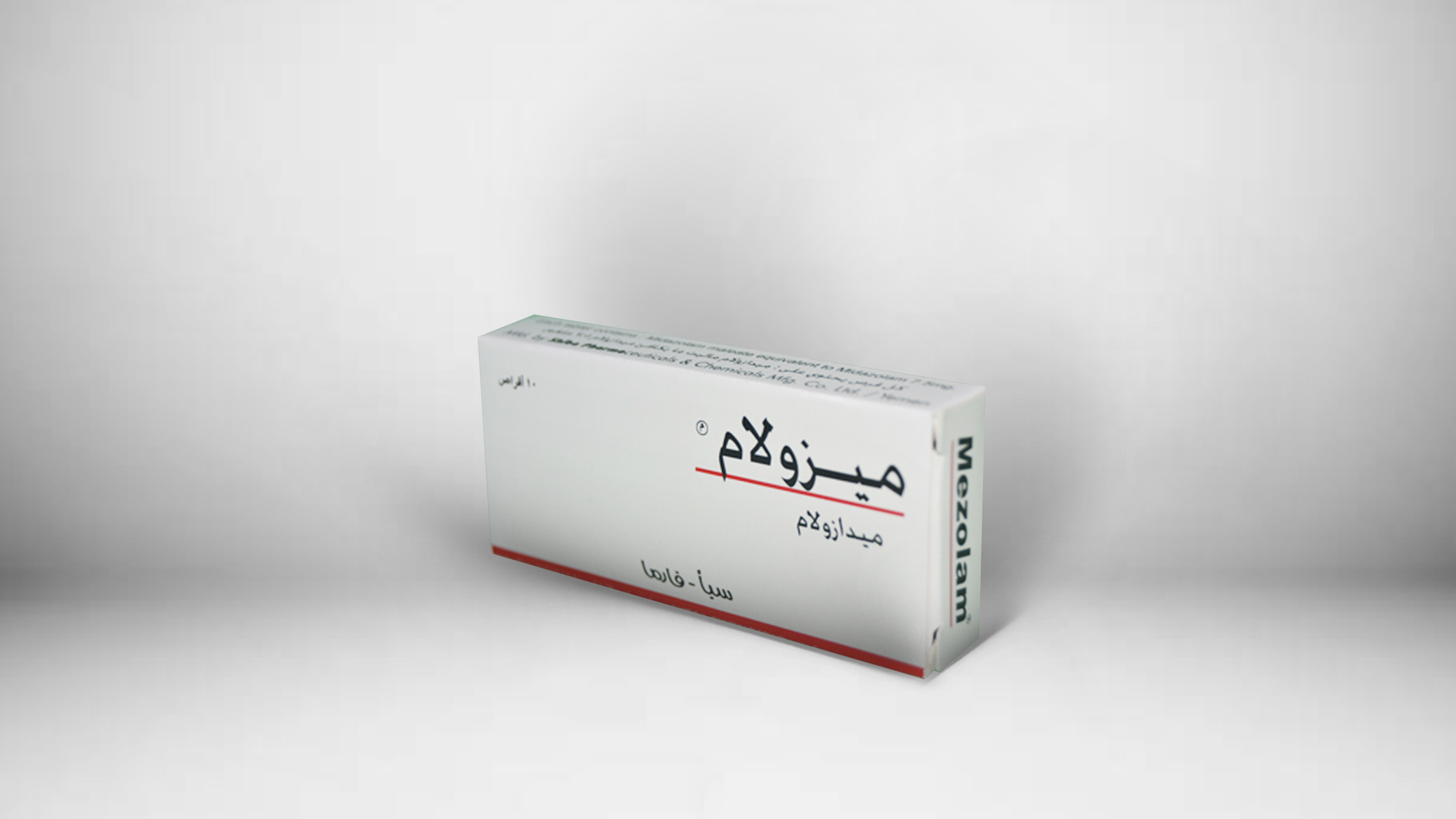
Mezolam
📌 COMPOSITION
Each tablet contains: Midazolam maleate equivalent to midazolam 7.5 mg, 15 mg.
📌 DESCRIPTION
Mezolam (Midazolam) is a rapidly acting hypnotic with a short biological half‑life. Mezolam reduces sleep onset time and prolongs sleep without quantitatively impairing REM sleep. Onset of sleep generally occurs within 20 minutes of ingestion of midazolam, and the duration of sleep generally becomes normal. After a suitable dose and sleep duration, there is generally no impairment of performance or reaction. Midazolam also has anticonvulsant, anxiolytic, sedative and muscle relaxant effects. Midazolam is absorbed rapidly and completely after oral administration and reaches maximum plasma concentration within one hour. 96-98% of midazolam is bound to plasma proteins. Midazolam is metabolised in the liver and is eliminated via the kidneys.
📌 INDICATIONS
Mezolam is indicated for:
- Short‑term treatment of sleep disturbances.
- Disturbances of sleep pattern, difficulty in getting to sleep, and difficulty in getting back to sleep after premature waking.
- Sedation in premedication before surgical or diagnostic procedures.
📌 DOSAGE & ADMINISTRATION
In general, the lowest effective dose should be given for as short a time as possible, and the duration of treatment should not exceed two weeks. The dose of midazolam should be stopped gradually.
- Adults: 7.5-15 mg.
- Elderly and frail patients, or patients with mild impairment of liver and/or renal function: 7.5 mg.
📌 RESTRICTIONS ON USE
Contraindications
- Hypersensitivity to benzodiazepines.
- Severe respiratory failure; insomnia in children; severe liver failure; myasthenia gravis and sleep apnoea syndrome.
Precautions
- Midazolam should not be used alone to treat insomnia associated with psychoses or depression.
- Administration of midazolam to patients receiving other centrally acting medication should be avoided.
- Midazolam should be used with extreme caution in patients with a history of alcohol and/or drug abuse.
- Patients should avoid consumption of alcohol, which may potentiate the undesirable effects of both substances.
Effect on the capacity to drive or use machines
Due to the sedative effect of midazolam on normal alertness and reactive capacity, patients should be warned against driving motor vehicles or operating dangerous machines during the first seven to eight hours after ingestion of the medicine.
Use in Pregnancy and Lactation
Midazolam should not be taken during pregnancy, especially during the first trimester, unless there is no safer therapeutic alternative available. Midazolam is excreted in breast milk; therefore, midazolam should not be taken by nursing mothers.
Dependence
Use of benzodiazepines can lead to dependence. To minimise the risk of dependence, benzodiazepines should be taken for as short a period as possible (not exceeding two weeks). To avoid withdrawal phenomena, the drug should be discontinued by gradual dose reduction.
📌 DRUG INTERACTIONS
- Concomitant use of midazolam with other centrally acting medication should be avoided.
- Co‑administration of midazolam with ketoconazole, nefazodone, itraconazole, fluconazole or erythromycin is not recommended.
- The dose of midazolam should be adjusted by reducing the dose if taken with roxithromycin, erythromycin, diltiazem, verapamil and saquinavir, and increasing the dose if taken with carbamazepine, phenytoin and rifampicin.
📌 SIDE EFFECTS
- Some effects occur predominantly at the start of treatment and generally disappear with dose reduction or continuation of treatment. These effects include: tiredness, daytime drowsiness, reduced alertness, confusion, headache, dizziness, muscle weakness, ataxia.
- Amnesia or depression may occur.
- Paradoxical reactions such as restlessness, excitability, agitation, aggressiveness, hallucinations and behavioural disturbances are known to occur with the use of benzodiazepines. They are more common in older patients and call for discontinuation of treatment, patient monitoring and support.
- Allergic reactions occur very rarely.
- Treatment with midazolam may lead to physical dependence or psychological dependence.
📌 OVERDOSAGE
Symptoms of overdosage may include severe drowsiness, confusion, slurred speech, ataxia, hypotension, respiratory depression and coma. Supportive care and monitoring of vital signs should be provided. Flumazenil may be used as an antidote in cases of severe intoxication, but should be used with caution and under medical supervision.
📌 STORAGE INSTRUCTIONS
Store below 30°C in a dry place.
📌 PHARMACEUTICAL FORMS
- Mezolam 7.5, 15: Pack of 10 tablets and hospital packs of different sizes.
📌 INSTRUCTIONS TO THE PATIENT
- Medicament is a product which affects your health, and its consumption contrary to instructions is dangerous for you.
- Follow strictly the doctor's prescription, the method of use and the instructions of the pharmacist who sold the medicament.
- The doctor and the pharmacist are experts in medicine, its benefits and risks.
- Do not by yourself interrupt the period of treatment prescribed for you.
- Do not repeat the same prescription without consulting your doctor.
Keep medicament out of reach of children
Mfd. By | P.O. Box: 4265 Sana'a / Yemen | Council of Arab Health Ministers