
Section :
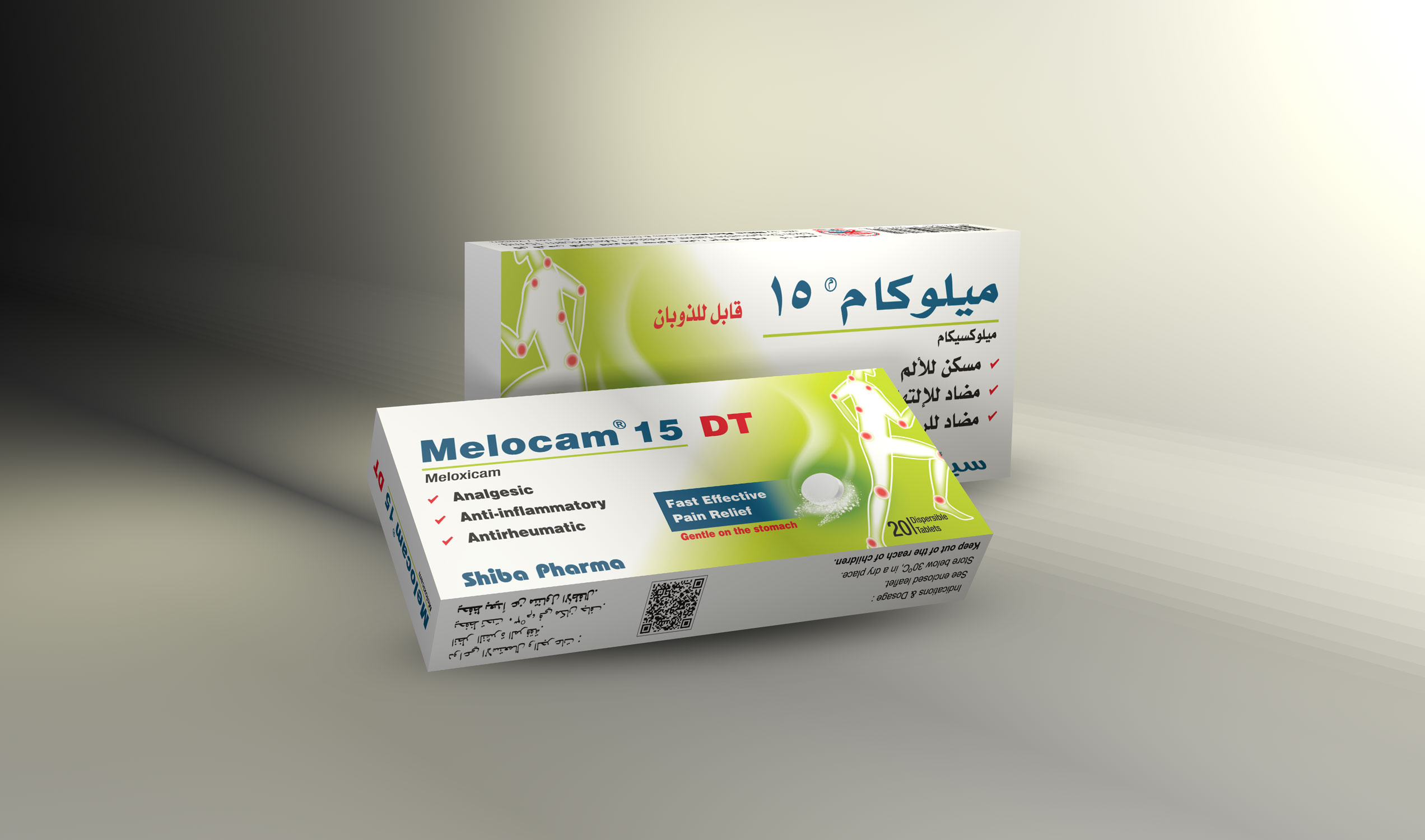
Melocam 15 DT
📌 COMPOSITION
Each dispersible tablet contains: Meloxicam 15 mg.
📌 DESCRIPTION
Melocam D.T tablets belong to a group of medicines called non-steroidal anti-inflammatory drugs (NSAIDs) which can be used to reduce inflammation and pain in joints and muscles. (Dispersible tablets are tablets which dissolve easily in the mouth).
📌 INDICATIONS
- The short-term treatment for the symptoms of acute attacks of osteoarthritis.
- The long-term treatment of the symptoms of:
- Rheumatoid arthritis.
- Ankylosing spondylitis (a disease of the backbone).
📌 DOSAGE & ADMINISTRATION
The way the drug is taken:
- Place the tablet in your mouth on your tongue.
- Allow it to dissolve, slowly for five minutes (It must never be chewed or swallowed undissolved).
- Swallow with a drink of 240 ml of water.
- If your mouth is dry, use water to moisten it first.
Adults and adolescents 16 years and above :
- Rheumatoid arthritis : 15 mg once daily . The dose may be reduced to 7.5 mg once daily.
- Osteoarthritis : 7.5 mg once daily. Increased if necessary to max. 15 mg once daily.
Elderly or patients with high risk of adverse effects : Initially 7.5 mg once daily.
📌 RESTRICTIONS ON USE
Contraindications
Do not take Meloxicam tablets and tell your doctor if you:
- Children and adolescents aged under 16 years.
- are allergic to Meloxicam, aspirin or to other non-steroidal anti-inflammatory medicines (NSAIDs).
- are pregnant, planning to become pregnant or if you are breastfeeding.
- have ever developed signs of asthma (wheezing), nasal polyps along with a runny nose, swelling of the skin or nettle‑rash, when taking aspirin or other anti‑inflammatory medicines.
- have or have ever had an ulcer of the stomach or intestines; any kind of bleeding disorder or suffered from bleeding in the stomach or intestines or bleeding in the brain.
- have severe liver disease; severe kidney failure and are not receiving dialysis.
- suffer from severe heart failure or from pain after coronary artery bypass.
- have a galactose intolerance, the Lapp‑lactose deficiency or glucose galactose malabsorption.
- have Crohn´s disease or ulcerative colitis.
Precautions
Tell your doctor or pharmacist before taking this medicine:
- If you have heart, liver or kidney disease.
- If you are elderly (65 years old or more).
- If you have a hypovolemia, which may occur if you have serious blood loss or burns, surgery or low fluid intake.
- If you have ever been diagnosed with high potassium levels in the blood.
- Caution should be taken in patients with high risk of heart attack or in case of the presence of other factors (such as hypertension, hyperlipidemia, diabetes mellitus, smoking), it should be given at the lowest effective dose for the shortest possible period.
- Skin rashes (Stevens‑Johnson syndrome) have been reported with using of Meloxicam appearing initially as reddish spots on the trunk and other signs include ulcers in the mouth, throat and nose. If these signs appeared, stop taking Meloxicam.
Use in Pregnancy and Lactation
Meloxicam is contraindicated to be used in the third trimester of pregnancy and not recommended during the first and second trimesters unless if necessary for the lowest effective dose and shortest possible period. It is not recommended for lactating women.
Effect on the ability of driving vehicles and use machines
Meloxicam may cause visual disturbances, dizziness or drowsiness, so caution should be taken.
📌 DRUG INTERACTIONS
- Concomitant administration with other NSAIDs increases the risk of GI bleeding and ulceration.
- Concomitant administration with oral anticoagulants increases the risk of bleeding.
- Concomitant administration with lithium increases lithium plasma levels.
- Concomitant administration with methotrexate may increase haematologic toxicity of methotrexate.
- Meloxicam reduces the effects of antihypertensive drugs.
- Cholestyramine leads to a faster elimination of Meloxicam.
- Nephrotoxicity of cyclosporine may be enhanced by Meloxicam.
- Patients who will receive diuretics and Meloxicam should be monitored for renal function before starting the treatment.
📌 ADVERSE EFFECTS
The adverse effects after administration of Melocam are well tolerated.
- Very common: gastrointestinal disturbances such as dyspepsia, nausea and vomiting, abdominal pain, constipation, flatulence and diarrhoea.
- Common: headaches.
- Rarely: ulcer, jaundice, urticaria, blood dyscrasia, transient disturbances of liver function.
📌 STORAGE INSTRUCTIONS
Store below 30°C, in a dry place.
📌 PRESENTATIONS
Melocam 15 D.T : Pack of different sizes.