
Section :
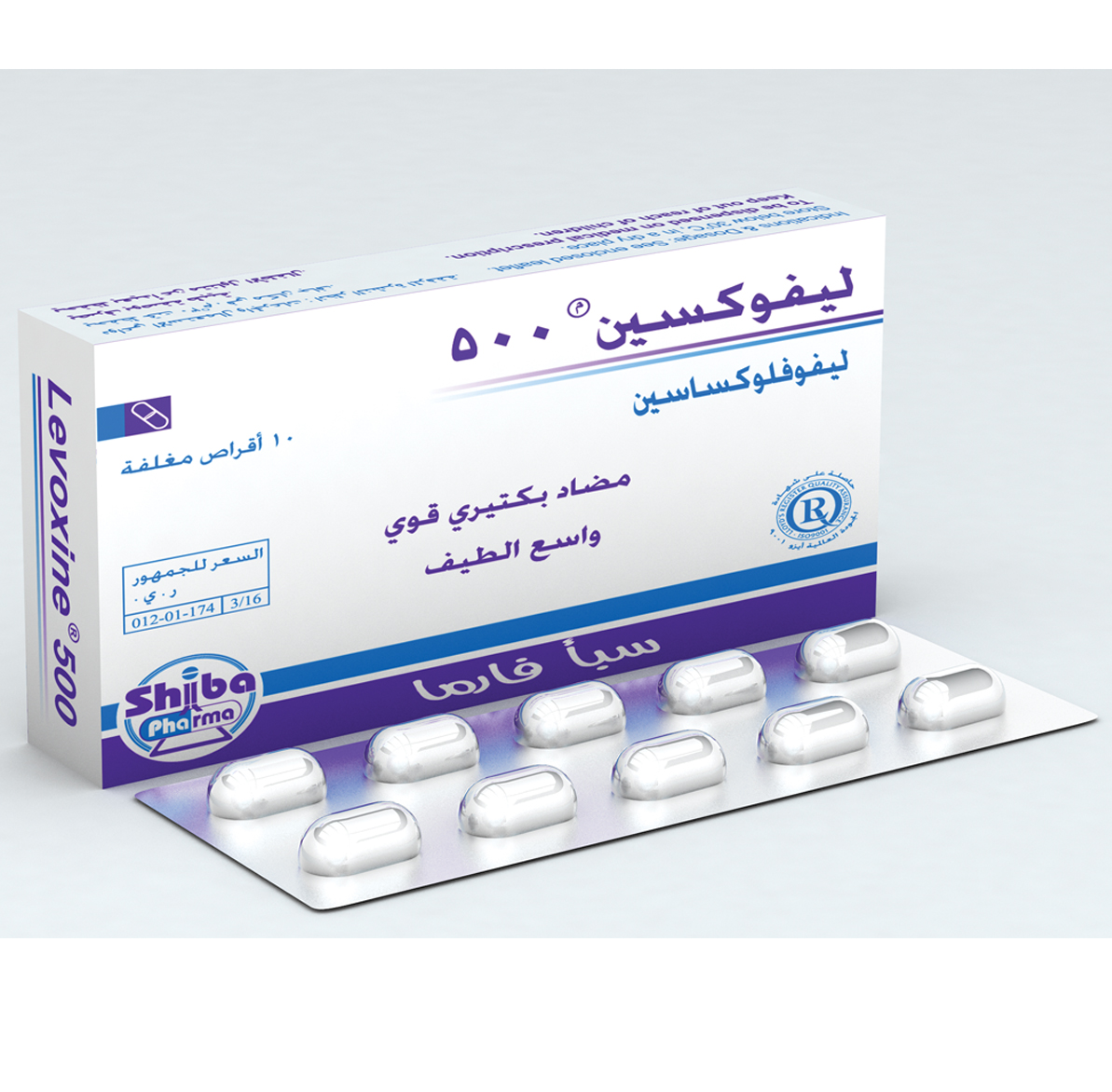
Levoxine 500
📌 COMPOSITION
Each F/C caplet contains: Levofloxacin hemihydrate USP equivalent to Levofloxacin 500 mg.
📌 DESCRIPTION
Levoxine (Levofloxacin) is a synthetic broad‑spectrum antibacterial agent of the fluoroquinolone class, and it is the L‑isomer of ofloxacin. Levoxine, orally, inhibits the bacterial DNA gyrase and Topoisomerase IV. It is rapidly and almost completely absorbed, with peak plasma concentration being obtained within 1-2 hours, and the absolute bioavailability of Levofloxacin is approximately 100%. About 30-40% of Levofloxacin are bound to serum protein, and only a small amount is metabolised to inactive metabolites. Levofloxacin is widely distributed into body tissues, including bronchial mucosa and lungs. The elimination half‑life is 6-8 hours and is prolonged in patients with renal impairment. It is excreted primarily in urine.
📌 INDICATIONS
Levoxine is indicated for the treatment of the following cases:
- Acute sinusitis.
- Acute exacerbation of chronic bronchitis.
- Community‑acquired pneumonia.
- Uncomplicated urinary tract infections and prostatitis.
- Complicated urinary tract infections including pyelonephritis.
- Skin and soft tissue infections.
- Septicaemia and bacteraemia.
- Intra‑abdominal infections.
📌 DOSAGE & ADMINISTRATION
Levoxine should be taken with a sufficient amount of liquid during or between meals as follows:
In adults with normal renal function (Creatinine clearance > 50 ml/min):
- Acute Sinusitis: 500 mg once daily for 10-14 days.
- Acute exacerbation of chronic bronchitis: 250-500 mg once daily for 7-10 days.
- Community‑acquired pneumonia: 500-1000 mg once or twice daily for 7-14 days.
- Uncomplicated urinary tract infections: 250 mg once daily for 3 days.
- Complicated urinary tract infections including pyelonephritis: 500 mg once daily for 28 days.
- Prostatitis: 500 mg once daily for 28 days.
- Skin and soft tissue infections: 250 mg once daily for 7-14 days or 500-1000 mg once or twice daily for 7-14 days.
- Septicaemia and Bacteraemia: 500-1000 mg once or twice daily for 10-14 days.
- Intra‑abdominal infections: 500 mg once daily for 7-14 days.
In adults with impaired renal function (Creatinine clearance < 50 ml/min):
📌 RESTRICTIONS ON USE
Contraindications
- Hypersensitivity to Levofloxacin or other quinolones.
- History of tendon disorders related to fluoroquinolone administration.
- During pregnancy and breast‑feeding.
- Children or adolescents.
- Epilepsy.
Precautions
- Dose of Levofloxacin should be adjusted in patients with renal impairment (creatinine clearance < 50 ml/min).
- Avoid excessive exposure to strong sunlight or artificial UV rays.
- Avoid using Levofloxacin for patients with G6PD deficiency.
- Superinfection may occur during prolonged therapy.
- Tendinitis may rarely occur, and if it is suspected, treatment with Levofloxacin must be stopped immediately.
- Levofloxacin should be used with extreme caution in patients predisposed to seizures.
- Persistent and/or bloody diarrhoea may be symptomatic of pseudomembranous colitis, and if it is suspected, Levofloxacin must be stopped immediately.
- Careful monitoring of blood glucose in diabetic patients is recommended when they use Levofloxacin.
- Caution is recommended if Levofloxacin is to be used in psychotic patients or in patients with a history of psychiatric disease.
- Caution should be taken when using Levofloxacin in patients with risk factors for QT prolongation.
Effect on the capacity to drive vehicles or use machines
Levofloxacin may cause dizziness/vertigo, drowsiness, and visual disturbances which may impair the ability to drive vehicles or use machines.
Use in Pregnancy and Lactation
Levofloxacin must not be used in pregnant women, and due to its distribution into breast milk, it should be avoided during lactation.
📌 DRUG INTERACTIONS
- There is no interaction between Levofloxacin and theophylline, fenbufen or similar non‑steroidal anti‑inflammatory drugs. However, a pronounced lowering of the cerebral seizure threshold may occur. Levofloxacin concentration increases in the presence of fenbufen.
- Co‑administration of Levofloxacin with cimetidine and probenecid leads to a significant effect on the elimination of Levofloxacin by reducing its renal clearance.
- Levofloxacin increases the half‑life of ciclosporin when co‑administered, but no dose adjustment of ciclosporin is needed.
- Use of Levofloxacin in combination with vitamin K antagonists (e.g., warfarin) will increase coagulation tests (PT/INR) and/or bleeding. Therefore, coagulation tests should be monitored.
- Iron salts, and magnesium‑ or aluminium‑containing antacids should not be taken 2 hours before or after Levofloxacin.
- Sucralfate should be taken 2 hours after Levofloxacin administration, due to its significant reduction in Levofloxacin bioavailability.
- Levofloxacin may inhibit the growth of Mycobacterium tuberculosis and may give false‑negative results in the bacteriological diagnosis of tuberculosis.
- Levofloxacin should be used with caution in patients receiving drugs known to prolong the QT interval (Class IA and III anti‑arrhythmics, tricyclic antidepressants, macrolides, antipsychotics).
📌 ADVERSE EFFECTS
- Common: Nausea, diarrhoea, increase in liver enzymes (e.g., ALT/AST).
- Uncommon: Pruritus, rash, anorexia, vomiting, abdominal pain, dyspepsia, headache, dizziness/vertigo, drowsiness, insomnia, eosinophilia, leukopenia, asthenia, fungal overgrowth and proliferation of other resistant micro‑organisms, increase in blood bilirubin and serum creatinine.
- Rare and very rare: Urticaria, bronchospasm, hypotension, photosensitisation, bloody diarrhoea, hypoglycaemia (particularly in diabetic patients), depression, anxiety, psychotic reactions, paraesthesia, confusion, convulsions, visual and auditory disturbance, arthralgia, myalgia, hepatitis, acute kidney failure, thrombocytopenia and neutropenia.
📌 OVERDOSAGE
In the case of acute overdose of Levofloxacin, some symptoms appear, such as confusion, dizziness, impairment of consciousness, convulsive seizures, increase in QT interval, nausea and mucosal erosions. There is no specific antidote for Levofloxacin overdose, but the patient should be carefully observed (including ECG monitoring) and symptomatic treatment should be implemented. Gastric lavage should be considered, and antacids may be used for protection of the gastric mucosa. Haemodialysis, including peritoneal dialysis and CAPD, is not effective in removing Levofloxacin.
📌 STORAGE INSTRUCTIONS
Store below 30°C in a dry place.
📌 PHARMACEUTICAL FORMS
- Levoxine Caplets: Pack of 10 caplets and hospital packs of different sizes.