
Section :
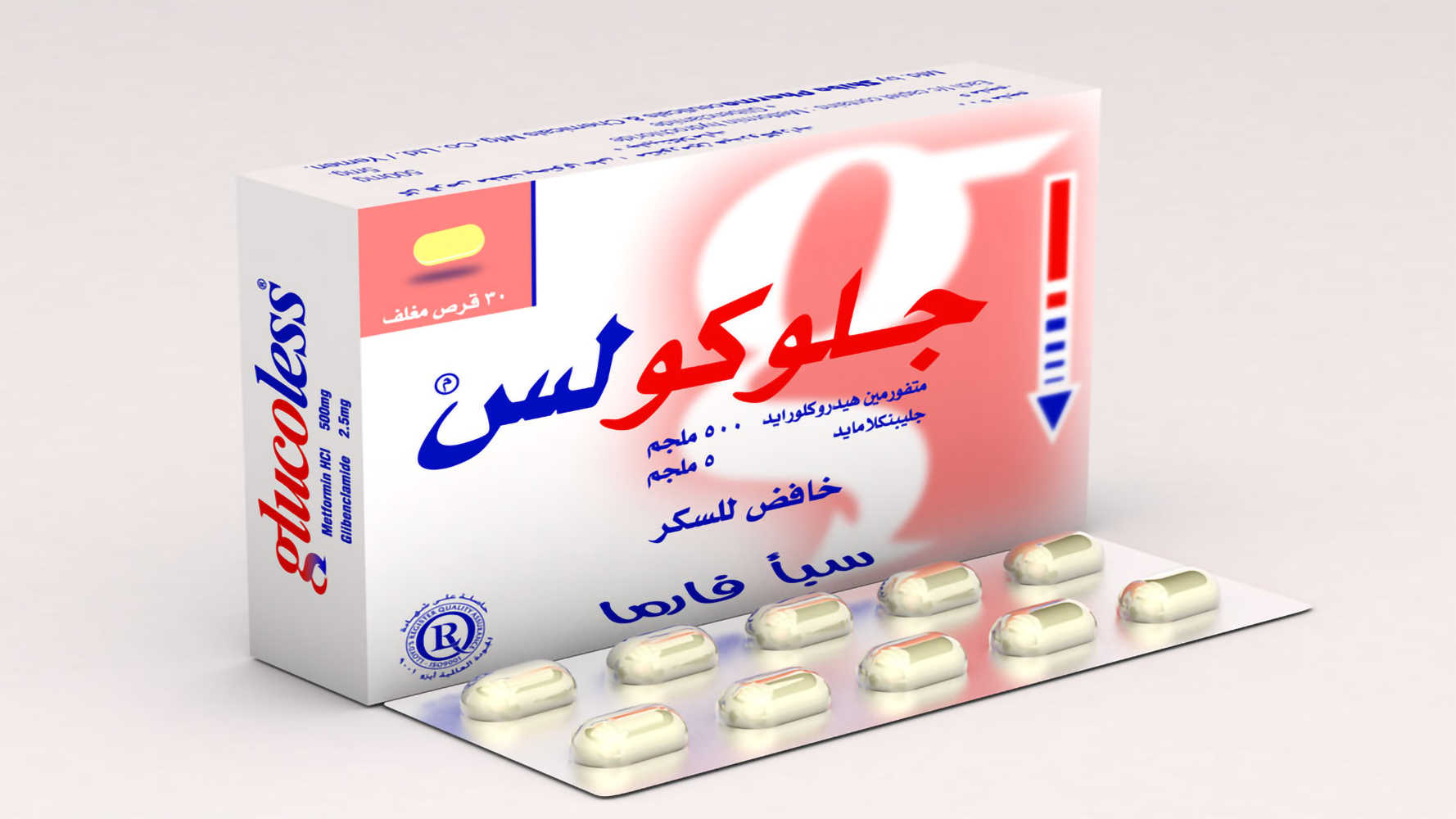
Glucoless
📌 COMPOSITION
- Each F/C tablet of Glucoless 2.5 mg / 500 mg contains: Glibenclamide 2.5 mg – Metformin hydrochloride 500 mg.
- Each F/C tablet of Glucoless 5 mg / 500 mg contains: Glibenclamide 5 mg – Metformin hydrochloride 500 mg.
📌 DESCRIPTION
Glucoless is a combination of two active materials:
- Metformin is a biguanide antidiabetic agent, lowering basal and postprandial plasma glucose. It reduces hepatic glucose production, increases insulin sensitivity in muscle, improves peripheral glucose uptake, and also slows intestinal glucose absorption.
- Glibenclamide is one of the second‑generation sulfonylureas, causing a rapid reduction of blood sugar levels by stimulating the release of insulin from the pancreas and increasing insulin‑binding receptor density in peripheral tissues.
After oral administration of Glucoless, metformin reaches its maximum concentration approximately after 2.5 hours and glibenclamide after 4 hours. Metformin plasma protein binding is negligible, while glibenclamide is extensively bound to plasma albumin (99%). Metformin is excreted unchanged in the urine, with an elimination half‑life of approximately 6.5 hours, while glibenclamide is completely metabolised in the liver into two metabolites and excreted in the bile (60%) and urine (40%), with an elimination half‑life of 4 to 11 hours.
📌 INDICATIONS
Treatment of type 2 diabetes (insulin‑independent) in adults, as a replacement for previous combination therapy of metformin and glibenclamide in patients whose glycaemia is stable and well‑controlled.
📌 DOSAGE AND ADMINISTRATION
- The initial dose should not exceed the daily dose of metformin and glibenclamide that the patient is already taking.
- The daily dose should preferably be adjusted every two weeks or more, according to blood glucose tests, by no more than one tablet of Glucoless 5 mg / 500 mg.
- The maximum daily dose is 2000 mg of metformin and 20 mg of glibenclamide.
- For elderly patients, the initial dose is one tablet of Glucoless 2.5 mg / 500 mg, and the dose should then be adjusted according to renal function tests.
📌 RESTRICTIONS ON USE
Contraindications
- Hypersensitivity to metformin, glibenclamide, or other sulfonylureas and sulfonamides.
- Type 1 diabetes (insulin‑dependent diabetes), ketoacidosis, diabetic pre‑coma.
- Renal failure or renal dysfunction (serum creatinine > 135 μmol/l in men and > 110 μmol/l in women).
- Dehydration, severe infection, shock, intravenous administration of iodinated contrast agents, cardiorespiratory failure or myocardial infarction.
- Hepatic insufficiency.
- Children and patients with porphyria.
Precautions
- Treatment with Glucoless should be stopped immediately and the doctor consulted if symptoms of lactic acidosis appear, which include vomiting, abdominal pain with muscle cramps, fatigue and difficulty in breathing. This condition occurs due to metformin accumulation, especially in patients with renal impairment.
- During treatment, signs of sudden hypoglycaemia may occur, such as cold sweat, cold and pale skin, dizziness, headache, rapid heartbeat, feeling sick, severe hunger and nervousness. In this case, glucose or any food containing sugar or honey should be taken immediately, the medicine should be stopped, and the doctor should be informed immediately.
- Glucoless should be stopped 48 hours before major surgery or X‑ray examinations involving injection of an iodinated contrast medium, and then resumed 48 hours after the procedure, after ensuring that renal function is normal.
- Renal function tests should be performed before starting Glucoless, and periodic renal function tests should be performed during treatment.
Use in Pregnancy and Lactation
Pregnant women, women planning to become pregnant, or breastfeeding women should not take this medicine because it may harm the baby.
Effects on ability to drive and use machines
Glibenclamide causes hypoglycaemia; therefore, it should not be taken while driving or using machines.
📌 DRUG INTERACTIONS
Glucoless should not be used concomitantly with: miconazole, phenylbutazone, all antidiabetic drugs, danazol, chlorpromazine, corticosteroids (glucocorticoids and tetracosactides), NSAIDs, diuretics, beta‑blockers, salbutamol, fluconazole, angiotensin‑converting enzyme inhibitors (captopril, enalapril), clarithromycin, erythromycin, and terbutaline.
📌 ADVERSE EFFECTS
Metformin:
- Common adverse effects: nausea, vomiting, diarrhoea, abdominal pain, loss of appetite and metallic taste in the mouth.
- Rare adverse effects: lactic acidosis, pruritus, urticaria, hepatitis or liver function test abnormalities resolving upon metformin discontinuation, and decreased vitamin B12 absorption and serum levels during long‑term use.
Glibenclamide:
- Hypoglycaemia, temporary vision disturbances, nausea, vomiting, diarrhoea, stomach discomfort, hives, itching, skin rash possibly leading to symptoms such as breathlessness and even shock, allergic vasculitis, abnormal laboratory values for liver and kidney tests and blood cells, jaundice, hepatitis, porphyria, feeling hot and redness.
📌 OVERDOSAGE
Metformin: A large overdose may lead to lactic acidosis. This is considered a serious medical emergency and should be treated in hospital. The most effective treatment is the removal of lactate and metformin by haemodialysis.
Glibenclamide: Overdose may lead to severe, life‑threatening hypoglycaemia. The patient must immediately take sugar. In the case of unconsciousness, an intravenous injection of concentrated glucose solution is indicated (for adults, starting with 40 ml of 20% solution).
📌 STORAGE INSTRUCTIONS
Store below 30°C in a dry place.
📌 PHARMACEUTICAL FORMS
- Glucoless 2.5 mg / 500 mg Tablets: Pack of 30 tablets and hospital packs of different sizes.
- Glucoless 5 mg / 500 mg Tablets: Pack of 30 tablets and hospital packs of different sizes.