
Section :
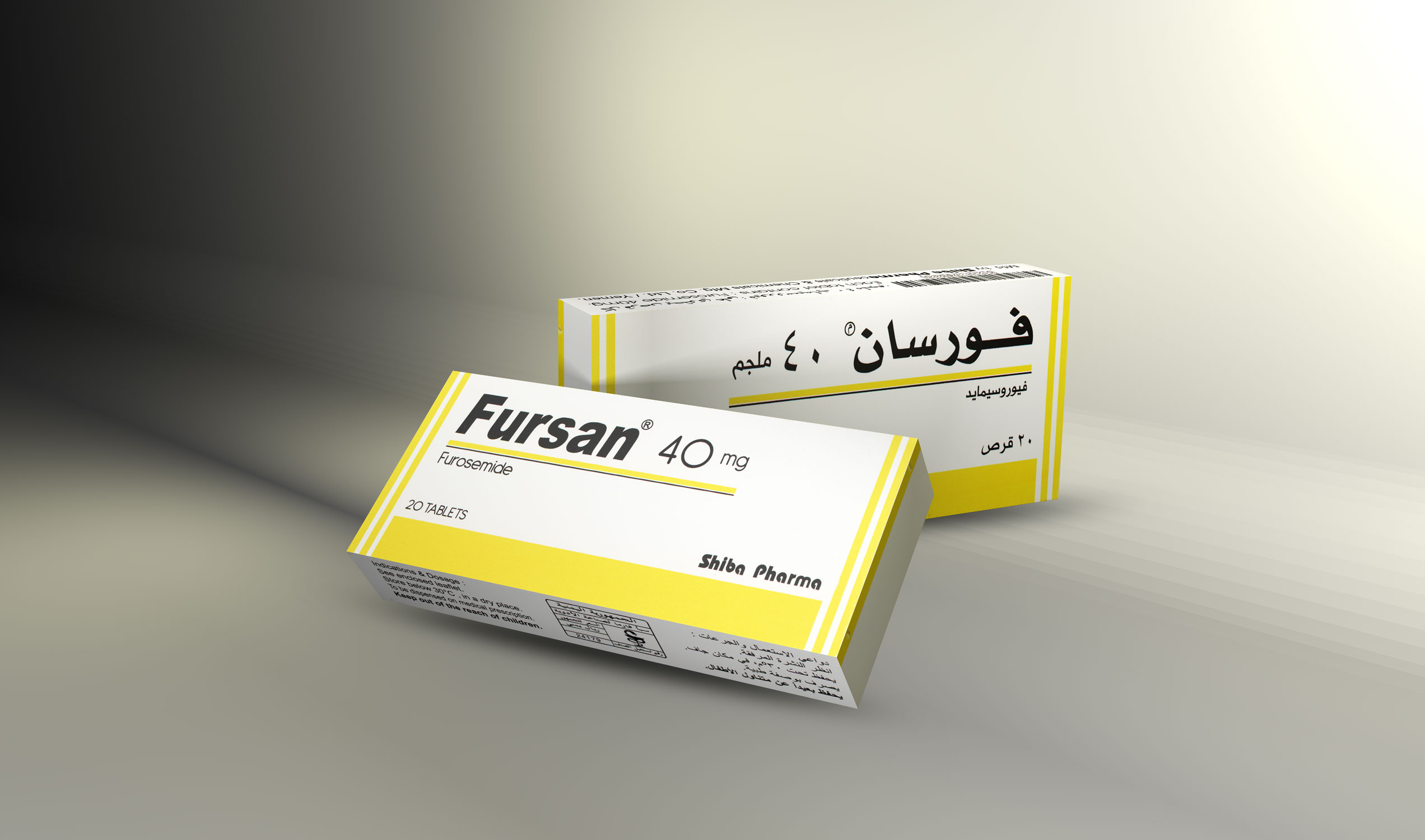
Fursan
📌 COMPOSITION
Each tablet contains: Furosemide 40 mg.
📌 DESCRIPTION
Fursan (Furosemide) is a member of a group of medicines called loop diuretics that help the kidneys to get rid of extra water that is not needed in the body. So, it is used to treat oedema condition that could be due to problems with the heart, lungs, kidneys, liver and blood vessels or high blood pressure. This can lessen symptoms such as shortness of breath and swelling in arms, legs and abdomen. Furosemide is rapidly absorbed and has a fast effect.
📌 INDICATIONS
- Treatment of oedema due to severe heart, lung, severe liver and kidney diseases.
- Treatment of hypertension. Fursan can be used alone or with other antihypertensive agents.
📌 DOSAGE & ADMINISTRATION
Adults and children over 12 years:
- Oedema: The usual starting dose is 40 mg in the morning, then 20 mg/day or 40 mg on alternate days. Up to 80 mg a day may be given.
- High blood pressure: 20-40 mg twice a day. If 40 mg twice daily is not effective, the addition of another antihypertensive agent rather than an increase in the dose should be considered.
- Patients with hypoproteinaemia, liver dysfunction, elderly: need dose adjustment.
📌 RESTRICTIONS ON USE
Contraindications
Hypersensitivity to furosemide and patients with anuria.
Precautions
- Caution should be taken in patients with: low blood volume or heart problem, low levels of protein, diabetes, prostate trouble, difficulty passing urine or gout, liver or kidney problems, undergoing any blood or urine tests, abnormal blood condition.
- Caution should be taken in elderly patients with dementia already treated with risperidone.
- If severe kidney damage (azotaemia, an increase in nitrogen level in the blood) and oliguria occur in patients during treatment of severe progressive renal disease, Fursan should be discontinued.
- Fursan should not be taken in the following cases: if the patient has low levels of potassium or sodium or other electrolytes, dehydration, low blood pressure, liver cirrhosis or hepatic encephalopathy.
- Caution should be taken in patients at high risk for radiocontrast nephropathy; Fursan can lead to a higher incidence of deterioration in renal function after receiving radiocontrast in these patients.
- In patients with severe urinary retention, Fursan can cause acute urinary retention related to increased production and retention of urine.
- Patients who are allergic to sulphonamide may also be allergic to Fursan. There is a possibility of exacerbation or activation of systemic lupus erythematosus.
- In patients with hypoproteinaemia, the effect of Fursan may be weakened and its ototoxicity potentiated.
Effect on ability to drive or use machines
Patients should not drive or use machines if they feel less alert.
Use in Pregnancy (Category C) and Lactation
Consult your doctor if you are pregnant or thinking of getting pregnant. Fursan should not be used during lactation.
📌 DRUG INTERACTIONS
Caution should be taken when co‑administering Fursan with the following drugs:
- Drugs that enhance the hypotensive effect: antihypertensives, antidepressants, phenothiazines, thymoxamine or hydralazine, nitrates, aldesleukin, anxiolytics and hypnotics, baclofen or tizanidine, theophylline, anaesthetic agents, levodopa, prostaglandin.
- Drugs that increase the risk of hypokalaemia and cardiac toxicity: CNS stimulants, antipsychotics, amiodarone, disopyramide, flecainide and sotalol, cardiac glycosides, reboxetine, antihistamines, amphotericin, thiazides, high doses of beta‑2 sympathomimetics.
- Sucralfate and colestyramine decrease GI absorption of Fursan, so it should be taken at least 2 hours before taking these drugs.
- Salicylates, because Fursan increases their effects.
- Aminoglycosides, polymyxins or vancomycin, NSAIDs lead to nephrotoxicity when used with furosemide.
- Carbamazepine increases the risk of hyponatraemia when used with furosemide, and it reduces plasma concentrations when used with aliskiren.
- Fursan reduces lithium excretion when used concomitantly.
- Fursan antagonises the hypoglycaemic effect of antidiabetic agents, and the patient may need to increase the insulin dose.
- Corticosteroids, oestrogens and progestogens antagonise the diuretic effect of Fursan and increase the risk of nephrotoxicity and ototoxicity with platinum compounds.
📌 ADVERSE EFFECTS
- Most common side effects: Dehydration, altered balance of fluid or chemicals in the body causing dry mouth, weakness or tiredness, restlessness, muscle pains, fatigue or cramps, low blood pressure.
- Common side effects: Low blood volume, increased creatinine and blood urea.
- Tell your doctor immediately if any of the following side effects occur:
- Severe allergic reaction.
- Stevens‑Johnson syndrome: blistering or peeling of the skin around the lips, eyes, mouth, and nose, accompanied by flu‑like symptoms and fever.
- Inflammation of blood vessels (rash, fever, joint or muscle pain) or kidney inflammation.
📌 STORAGE INSTRUCTIONS
Store below 30°C in a dry place.
📌 PHARMACEUTICAL FORMS
Fursan Tablets: Packs of different sizes.