
Section :
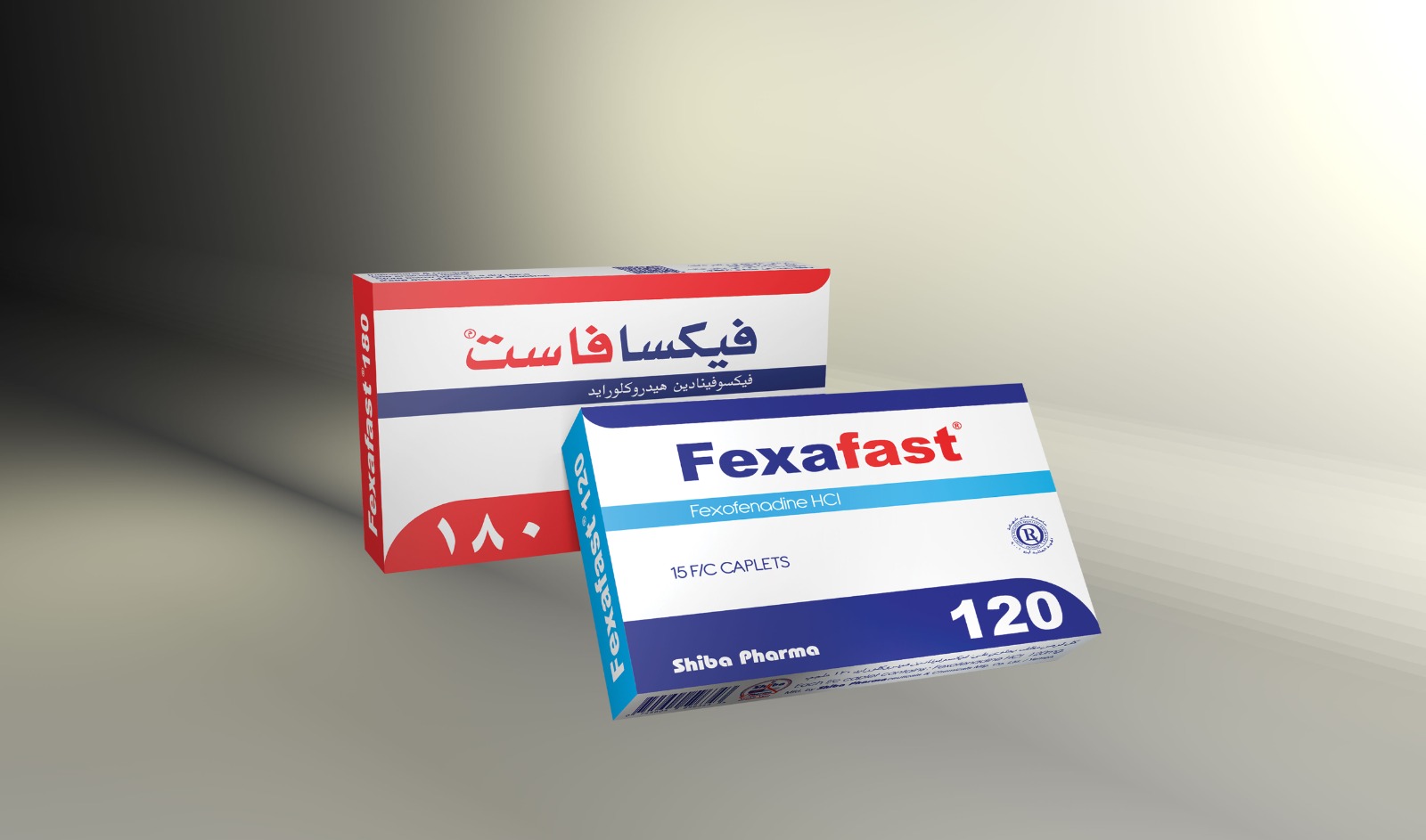
Fexafast
📌 COMPOSITION
Each F/C tablet contains: Fexofenadine hydrochloride 120 mg, 180 mg.
📌 DESCRIPTION
Fexafast (Fexofenadine hydrochloride) is a non‑sedating H1 antihistamine and it is the active metabolite of terfenadine. Fexofenadine is classified as a second‑generation antihistamine because it is less able to pass the blood‑brain barrier and cause sedation.
📌 INDICATIONS
Fexafast is indicated for:
- Relief of symptoms associated with seasonal allergic rhinitis (sneezing, itchy and runny nose, itchy and watery eyes).
- Relief of symptoms of chronic idiopathic urticaria such as itching, swelling and rash.
📌 DOSAGE & ADMINISTRATION
- Adults and children 12 years and over: The recommended dose is one tablet (120 mg or 180 mg) once daily taken before a meal.
- Patients with impaired renal function (CrCl < 80 ml/min): The recommended starting dose is 60 mg once daily initially.
📌 RESTRICTIONS ON USE
Contraindication
Hypersensitivity to Fexofenadine hydrochloride.
Precautions
Caution should be taken in patients with the following cases:
- The elderly patients.
- Patients with a history of or ongoing cardiovascular disease or with liver or kidney problems.
Use in Pregnancy and Lactation
Fexafast should not be used during pregnancy unless clearly necessary, and it is not recommended to be used during lactation.
Effects on ability to drive and use machines
It is unlikely that Fexafast tablets will produce an effect on the ability to drive or use machines, but it is advisable to check individual responses before driving or performing complicated tasks.
📌 DRUG INTERACTIONS
- Co‑administration of Fexofenadine hydrochloride with Erythromycin or Ketoconazole results in an increased concentration of Fexofenadine in plasma (2‑3 fold).
- Administration of an antacid containing aluminium and magnesium hydroxide gels 15 minutes prior to Fexofenadine hydrochloride caused a reduction in bioavailability; therefore, it is advisable to leave 2 hours between administration of Fexofenadine hydrochloride and aluminium‑ or magnesium‑hydroxide‑containing antacids.
📌 ADVERSE EFFECTS
Common side effects: headache, drowsiness, dizziness, nausea.
📌 OVERDOSAGE
Symptoms: Dizziness, drowsiness, fatigue and dry mouth. Single doses up to 800 mg and doses up to 690 mg twice daily for 1 month or 240 mg once daily for 1 year have been administered to healthy subjects without the development of clinically significant adverse reactions.
Treatment: Standard measures should be considered to remove any unabsorbed medicinal product. Symptomatic and supportive treatment is recommended. Haemodialysis does not effectively remove Fexofenadine hydrochloride from the blood.
📌 STORAGE INSTRUCTIONS
Store below 30°C in a dry place.
📌 PHARMACEUTICAL FORMS
- Fexafast 120 Tablets: pack of 15 tablets and hospital packs of different sizes.
- Fexafast 180 Tablets: pack of 15 tablets and hospital packs of different sizes.