
Section :
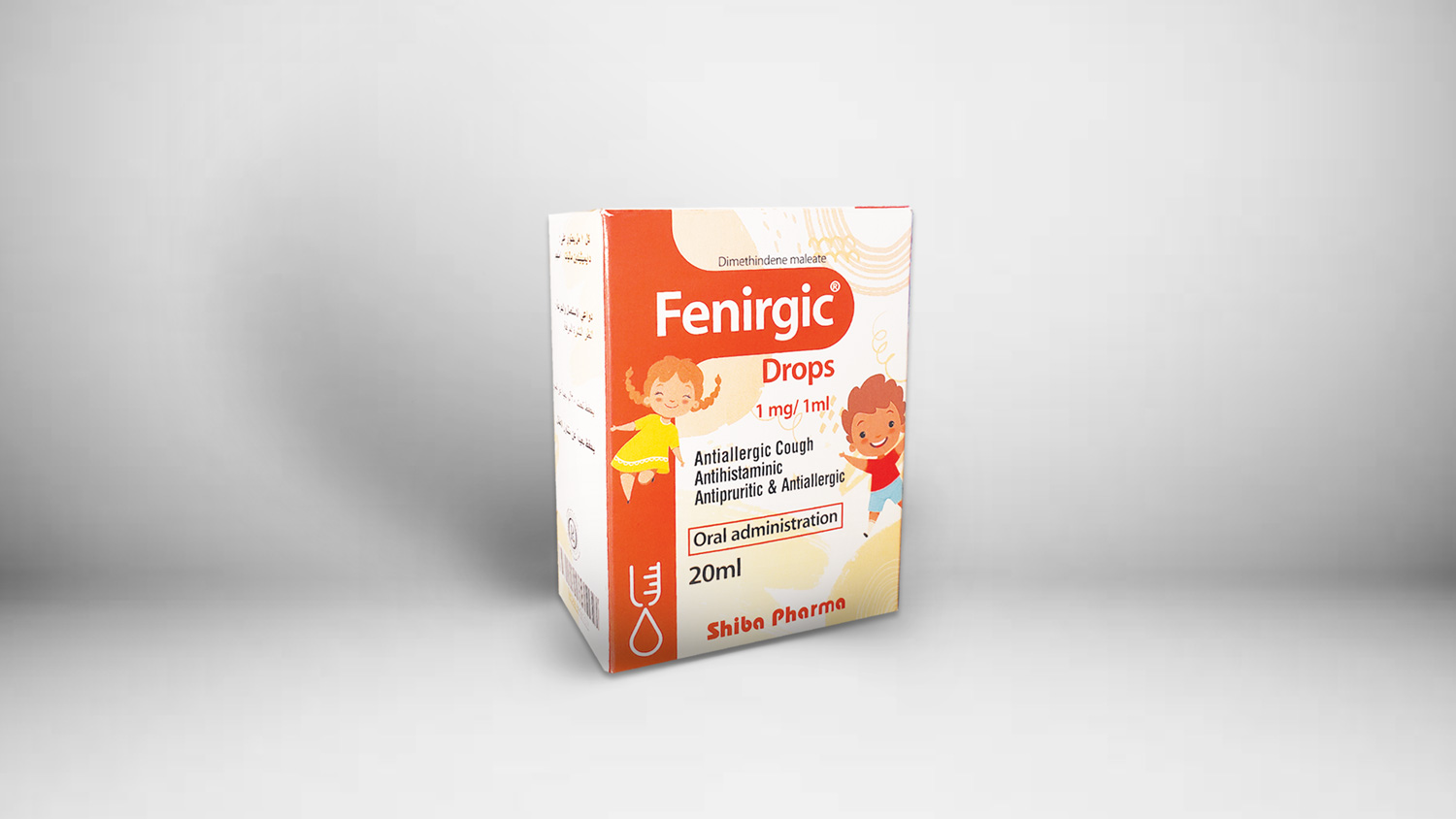
Fenirgic
📌 COMPOSITION
- Each 1 ml of drops contains: Dimethindene maleate 1 mg.
- Each F/C tablet contains: Dimethindene maleate 1 mg.
📌 DESCRIPTION
Fenirgic (Dimethindene maleate) is an antihistamine. It blocks histamine receptors which are responsible for causing itching and allergic reactions, thus it reduces capillary permeability and itching. After oral administration, the effect of Dimethindene maleate begins after 30-60 minutes and lasts for 8-12 hours.
📌 INDICATIONS
- Symptomatic treatment of pruritus of different origins, such as urticaria, measles, chicken pox, food allergy, drug allergy, eczema, varicella, insect bites, senile pruritus.
- Symptomatic treatment of allergic rhinitis, such as hay fever or perennial rhinitis.
📌 DOSAGE & ADMINISTRATION
- Children: Usual daily dose 0.1 mg/kg.
- Children under 1 year (administered only on medical advice): 0.15-0.5 mg (3-10 drops) 3 times a day.
- Children 1-3 years: 0.5-0.75 mg (10-15 drops) 3 times a day.
- Children 3-12 years: 0.75-1 mg (15-20 drops) 3 times a day.
- Adults and adolescents: 1-2 tablets 3 times a day.
- In susceptible patients with a tendency to sedation, it is recommended to take 2 tablets at bedtime and 1 tablet at breakfast.
- If the patient shows no improvement after 3 days of treatment, consult the doctor.
📌 RESTRICTIONS ON USE
Contraindications
- Hypersensitivity to Dimethindene maleate.
- Premature infants and children younger than one month.
- Patients with prostatic hypertrophy, bladder obstruction or cardiac arrhythmias.
Precautions
- Caution should be taken in patients with glaucoma, bladder obstruction (e.g., prostatic hypertrophy), peptic ulcer, pyloroduodenal obstruction, cardiovascular disease, severe hypertension, hyperthyroidism or asthma, chronic pulmonary disease.
- Caution should be taken when taking this drug, especially as the sedative effect may be associated with episodes of sleep apnoea.
- Fenirgic is not effective in itching associated with cholestasis.
Use in Pregnancy and Lactation
Fenirgic should be administered during pregnancy only in cases of absolute necessity and only if the desired effect outweighs the potential risks. The use of Dimethindene maleate during lactation is not recommended.
Effects on the ability to drive vehicles or use machines
Fenirgic can cause drowsiness, so caution is required when driving a vehicle or using machines.
📌 DRUG INTERACTIONS
- Concomitant intake of Fenirgic with tranquillizers, anxiolytics, hypnotics and anticonvulsants, antidepressants (MAOIs, tricyclic antidepressants), antihistamines, antiemetics, antipsychotics may strengthen the sedative effect on the central nervous system.
- The combination of antihistamines with tricyclic antidepressants or anticholinergics such as bronchodilators and GI spasmolytics can increase the antimuscarinic effects, leading to possible worsening of conditions such as glaucoma or urinary retention.
📌 SIDE EFFECTS
The sedative effect, which varies according to individual susceptibility, occurs only at high doses. Drowsiness is sometimes observed, particularly in early treatment. Isolated cases of angioneurotic oedema have been reported, as well as rare cases of dizziness, headache, anorexia, diarrhoea, nausea, dry mouth or throat.
📌 OVERDOSAGE
Symptoms: CNS depression with drowsiness (especially in adults), CNS stimulation and antimuscarinic effects, especially in children, including convulsions, urinary retention and fever.
Treatment: There is no specific antidote for Dimethindene maleate. Usual emergency assistance should be given to treat the symptoms, with monitoring of cardiac and respiratory functions.
📌 STORAGE INSTRUCTIONS
Tablets and drops: Store below 30°C in a dry place, protect from light.
📌 PHARMACEUTICAL FORMS
- Fenirgic drops: Bottle of 20 ml.
- Fenirgic tablets: Pack of different sizes.