
Section :
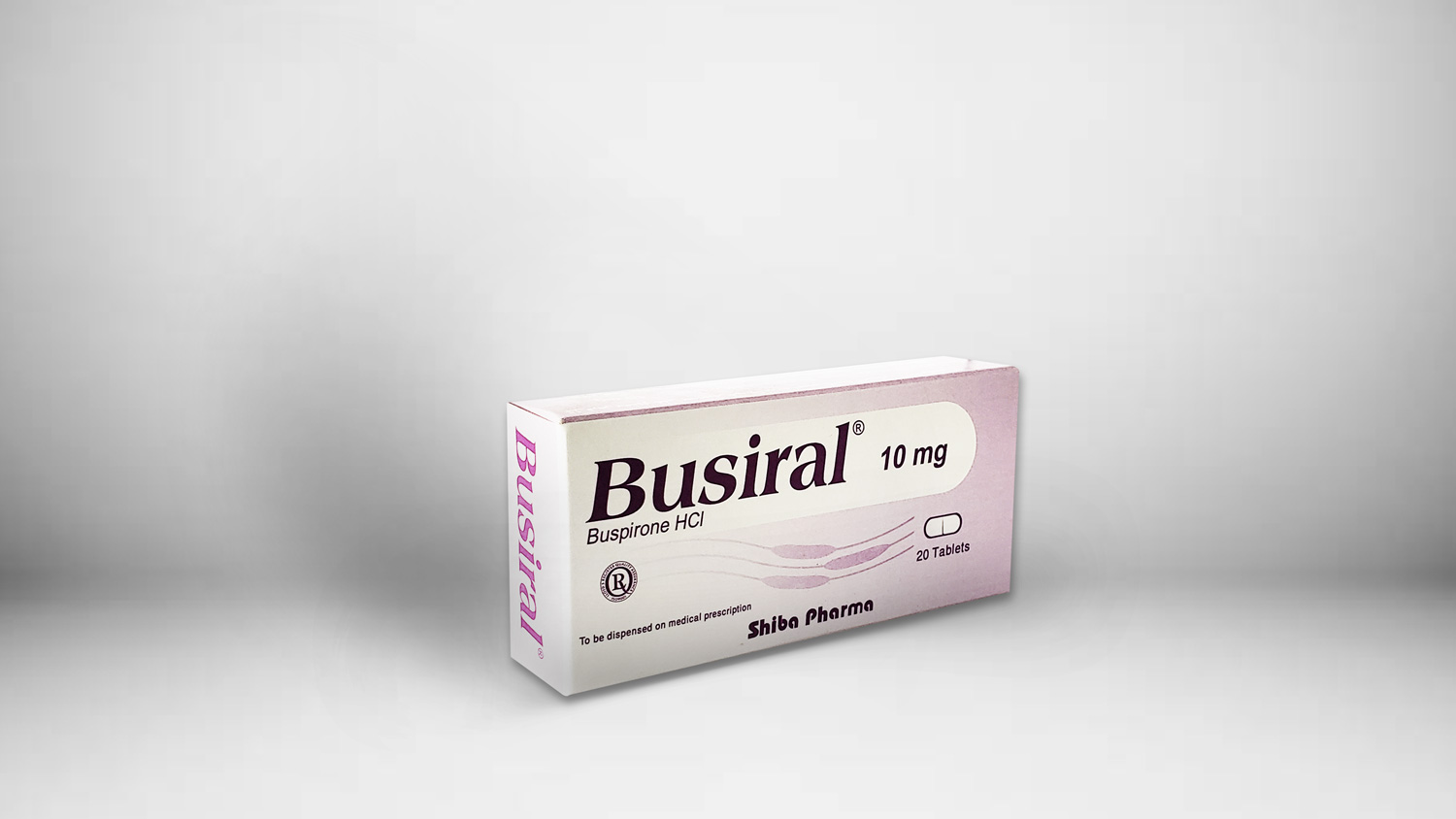
Busiral
📌 COMPOSITION
Each tablet contains: Buspirone HCl USP 5 mg, 10 mg.
📌 DESCRIPTION
Busiral (Buspirone HCl) is an antianxiety agent with a selective effect, since it does not have sedative, anticonvulsant or muscle relaxant actions. Buspirone has dopaminergic, noradrenergic and serotonin‑modulating properties; however, its anxiolytic effects appear to be related to its action on (5-HT1A). Buspirone is rapidly absorbed from the G.I.T., but undergoes extensive first‑pass metabolism. Peak plasma concentrations are reached within 40-90 minutes. Buspirone is about 95% bound to plasma proteins, and the elimination half‑life is usually about 2-3 hours, but half‑lives of up to 11 hours have been reported. Buspirone is excreted mainly as metabolites in the urine and also in the faeces.
📌 INDICATIONS
Busiral is indicated in the management of anxiety disorders or short‑term relief of symptoms of anxiety.
📌 DOSAGE & ADMINISTRATION
The usual starting dose is 5 mg 2-3 times daily. This may be increased by 5 mg increments every 2-3 days, depending upon the therapeutic response, to the maximum daily dose of 60 mg daily.
The dose should be adjusted in patients with moderate hepatic or renal disease.
Safety and effectiveness of Buspirone have not been determined in children below 18 years of age.
📌 RESTRICTIONS ON USE
Contraindications
- Hypersensitivity to Buspirone HCl.
- Patients with severe renal or hepatic diseases.
- Patients with a history of seizure disorders or epilepsy.
Precautions
- Use with caution in patients with moderate hepatic or renal diseases.
- Benzodiazepines should be gradually withdrawn before initiating therapy with Buspirone.
Effect on the capacity to drive vehicles and operate machinery
Buspirone has a low incidence of sedation, so patients should be cautioned about driving or operating machinery.
Use in pregnancy and lactation
Buspirone should be avoided during pregnancy and breastfeeding.
📌 DRUG INTERACTIONS
- Using Buspirone with MAOIs increased blood pressure of patients.
- Sedative effects of Buspirone are enhanced by the simultaneous administration of alcohol or other CNS depressants.
- The plasma concentration of Buspirone increases when co‑administered with nefazodone, erythromycin, itraconazole and consumption of large amounts of grapefruit juice.
- The toxic effects of Buspirone will be increased if administered with diltiazem or verapamil.
- The plasma concentration of Buspirone decreases when co‑administered with rifampicin.
- Caution should be exercised if Buspirone is concomitantly used with diazepam, prazepam, chlordiazepoxide, clorazepate and haloperidol.
📌 SIDE EFFECTS
Adverse effects usually appear at the beginning of therapy and subsequently subside.
The most common adverse effects include: dizziness, nausea, headache, nervousness, lightheadedness, sleep disturbances and syndrome of restlessness.
The less common adverse effects include: dry mouth, tinnitus, drowsiness, fatigue, sweating, palpitation, tachycardia and confusion.
📌 STORAGE INSTRUCTIONS
Store between 15-25°C in a dry place. Protect from light.
📌 PHARMACEUTICAL FORMS
- Busiral 5 mg, 10 mg tablets: Pack of 20 tablets and hospital packs of different sizes.
📌 INSTRUCTIONS TO THE PATIENT
- Medicament is a product which affects your health, and its consumption contrary to instructions is dangerous for you.
- Follow strictly the doctor's prescription, the method of use and the instructions of the pharmacist who sold the medicament.
- The doctor and the pharmacist are experts in medicine, its benefits and risks.
- Do not by yourself interrupt the period of treatment prescribed for you.
- Do not repeat the same prescription without consulting your doctor.
Keep medicament out of reach of children
BSL 6/08 | Council of Arab Health Ministers | Union of Arab Pharmacists | Mfd. By: Shiba Pharma P.O. Box: 4265 Sana'a / Yemen