
Section :
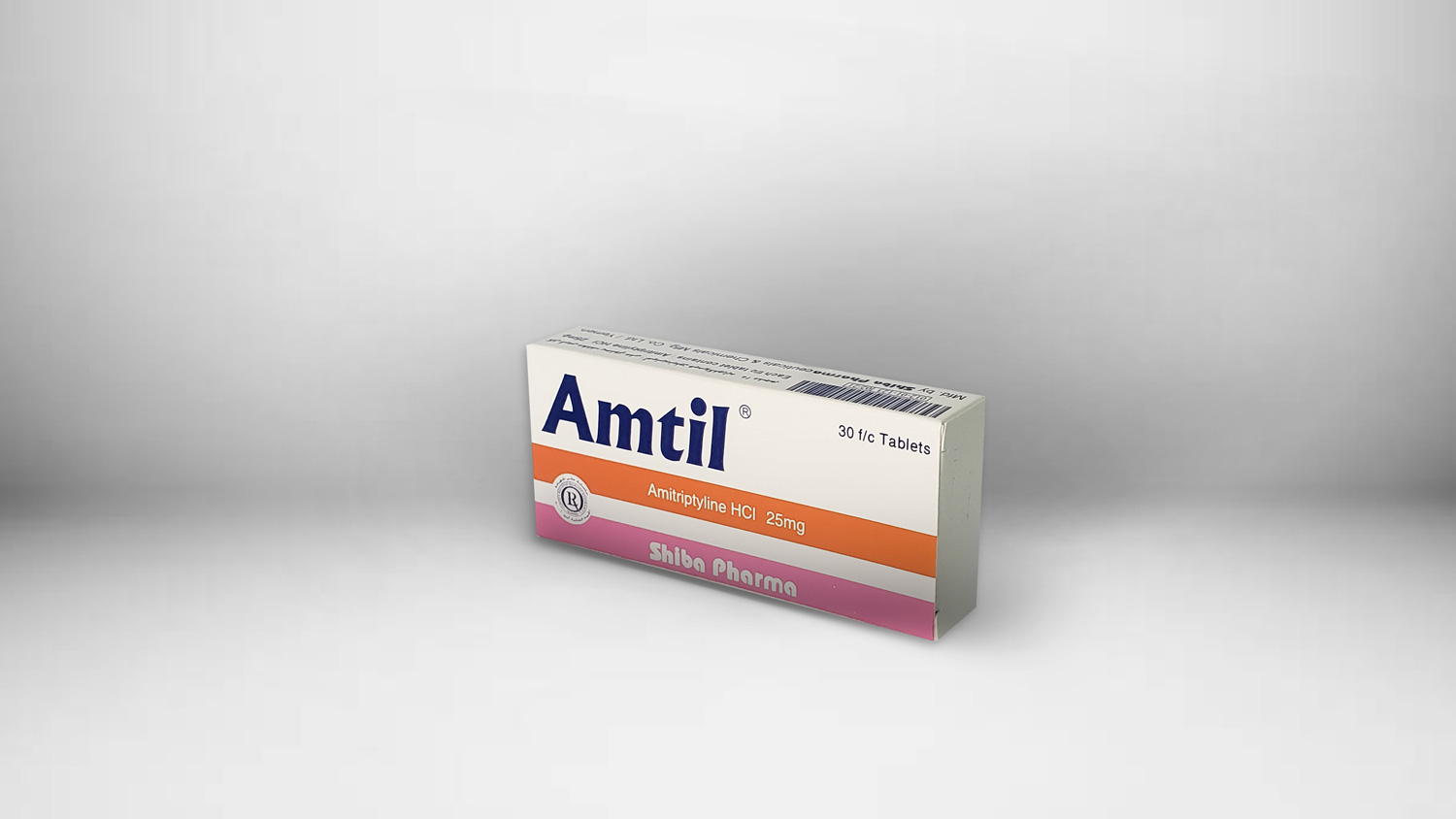
Amtil
📌 COMPOSITION
Each film‑coated tablet contains: Amitriptyline HCl USP 10 mg, 25 mg and 50 mg.
📌 DESCRIPTION
Amtil (Amitriptyline) is a tricyclic antidepressant which acts by inhibiting the neuronal re‑uptake of norepinephrine and serotonin (5-HT) in the CNS. It is readily absorbed from the gastrointestinal tract, and peak plasma concentrations occur within a few hours of oral administration. It is metabolised in the liver into the active metabolite nortriptyline. Both (amitriptyline and nortriptyline) are widely distributed throughout the body and extensively bound to plasma and tissue proteins; they also cross the placenta and are distributed into breast milk. The elimination half‑life of amitriptyline ranges from 9 to 36 hours. It is excreted in urine mainly in the form of metabolites, either free or conjugated.
📌 INDICATIONS
Amtil is indicated in:
- Depression.
- Nocturnal enuresis where organic pathology has been excluded.
- Treatment of chronic pain conditions.
📌 DOSAGE AND ADMINISTRATION
- In depression:
- Adults: The initial dose is 25 mg three times daily, which may be gradually increased by the doctor to 50 mg three times daily.
- Elderly patients (above 65 years): The initial dose is 10 mg three times daily, which may be gradually increased by the doctor to a total daily dose of 100-150 mg.
- Chronic pain: The initial dose is 25 mg at night, which may be gradually increased by the doctor to a maximum of 100 mg at night in adults and 50 mg at night in elderly.
- Patients with liver disorders should take lower doses.
📌 RESTRICTIONS ON USE
Contraindications
- Hypersensitivity to the drug.
- It should not be given concomitantly with MAO inhibitors.
- The drug is not recommended for use during the acute recovery phase following myocardial infarction.
- It should be avoided in severe liver disease.
Precautions
- It should be used with caution in patients with a history of seizures, glaucoma, increased intra‑ocular pressure, urinary retention, enlarged prostate, liver diseases, overactive thyroid gland and diabetes.
- Patients with cardiovascular disorders should be watched closely when the drug is administered.
- Concurrent administration of the drug with electroconvulsive therapy may increase the hazard of therapy.
- In view of lacking experience in the use of this medicine to treat depression in children, it is not recommended for depressed patients under 12 years.
Effects on the capacity to drive vehicles or use machines
Amitriptyline may impair alertness; thus, operating machinery or driving a vehicle should be avoided.
Use in Pregnancy and Lactation
The drug should be used during pregnancy only if there are compelling reasons, and should be stopped gradually 14 days to 3 weeks before the expected birth. It should be avoided by nursing women.
📌 DRUG INTERACTIONS
- Side effects may be enhanced by concurrent administration of antimuscarinic drugs, CNS depressants including alcohol, with amitriptyline.
- Barbiturates, rifampicin and some antiepileptics lower plasma concentrations of amitriptyline and reduce the antidepressant response.
- Cimetidine, methylphenidate, antipsychotics and calcium channel blockers increase amitriptyline concentration in plasma.
- The antihypertensive effects of bethanidine, debrisoquine, guanethidine and possibly clonidine may be reduced by amitriptyline.
- The risk of arrhythmia may be increased with concomitant administration of halofantrine, terfenadine, cisapride, sotalol, astemizole and thyroid preparations with amitriptyline.
- It increases the hypoglycaemic effect of oral hypoglycaemic agents (sulphonylureas, e.g., glibenclamide).
- Concomitant use of different antidepressants leads to severe adverse reactions.
📌 SIDE EFFECTS
- Cardiovascular: Hypotension, tachycardia and arrhythmias.
- CNS: Confusion states, anxiety, numbness, restlessness, peripheral neuropathy, ataxia, tinnitus, incoordination, tremor and seizures.
- Anticholinergic: Dry mouth, constipation, urinary retention, blurred vision and disturbances in accommodation, increased intra‑ocular pressure and hyperthermia.
- Allergic: Urticaria, angioedema and photosensitisation.
- Blood disorders: Bone marrow depression, eosinophilia, thrombocytopenia, leukopenia and agranulocytosis.
- Gastrointestinal: Sour or metallic taste, stomatitis, gastric irritation, nausea and vomiting.
- Endocrine: Testicular enlargement, gynaecomastia in males, breast enlargement and galactorrhoea in females, change in blood sugar level and increased or decreased libido.
- Others: Headache, fatigue, weakness, weight gain or loss, increased perspiration, drowsiness and alopecia.
📌 STORAGE INSTRUCTIONS
Store below 25°C in a dry place.
📌 PHARMACEUTICAL FORMS
- Amtil 10, 25 and 50 mg tablets: Blister pack of 30 tablets and hospital packs of different sizes.
📌 INSTRUCTIONS TO THE PATIENT
- Medicament is a product which affects your health, and its consumption contrary to instructions is dangerous for you.
- Follow strictly the doctor's prescription, the method of use and the instructions of the pharmacist who sold the medicament.
- The doctor and the pharmacist are experts in medicine, its benefits and risks.
- Do not by yourself interrupt the period of treatment prescribed for you.
- Do not repeat the same prescription without consulting your doctor.
Keep medicament out of reach of children
012-06-064 11/12 | Mfd. By | P.O. Box: 4265 Sana'a / Yemen | Council of Arab Health Ministers | Union of Arab Pharmacists