
Section :
Alfacalcidol
📌 COMPOSITION
Each soft gelatin capsule contains: Alfacalcidol 0.25 mcg or 1 mcg.
📌 DESCRIPTION
Alfacalcidol (1α-hydroxyvitamin D₃) is a vitamin D analogue. Alfacalcidol is converted rapidly in the liver to 1,25-dihydroxyvitamin D₃ (Calcitriol - the active metabolite of vitamin D) and does not require renal hydroxylation as with vitamin D administration. Alfacalcidol acts as a regulator of calcium and phosphate metabolism and increases their intestinal absorption, hence it helps in bone mineralization. The major advantage of Alfacalcidol is that it has rapid onset of response and if hypercalcaemia occurs due to its administration, it can be treated within days of stopping treatment.
📌 INDICATIONS
- Alfacalcidol is indicated for treatment of renal osteodystrophy caused by reduced endogenous production of 1,25-dihydroxyvitamin D₃ in consequence of impaired kidney function.
- For treatment of osteomalacia in adults and rickets in children caused by vitamin D deficiency due to inadequate exposure to sunlight, lack of vitamin D in nutrition or malabsorption.
- Postmenopausal osteoporosis and steroid-induced osteoporosis.
- Hypoparathyroidism and as adjunct to hyperparathyroidism management.
📌 DOSAGE & ADMINISTRATION
Initial dose for all indications:
- Adults and children over 20 kg body weight: 1 mcg/day.
- The elderly: 0.5 mcg/day.
It is important to adjust the dose according to the biochemical response to avoid hypercalcaemia. Indices of response are: serum levels of calcium, alkaline phosphatase, parathyroid hormone, urinary calcium excretion as well as radiographic and histological investigations. The daily dose of Alfacalcidol may be increased by increments of 0.25 - 0.5 mcg/day and most adult patients respond to doses between 1 - 3 mcg/day. When there is biochemical or radiographic evidence of bone healing, the dose generally decreases.
Maintenance doses: are generally in the range of 0.25 - 1 mcg/day.
📌 RESTRICTIONS ON USE
Contraindications
- Hypersensitivity to vitamin D or Alfacalcidol.
- Hypercalcaemia, hyperphosphataemia (except when occurring with hypoparathyroidism) or hypermagnesaemia.
Precautions
- Plasma levels of calcium and phosphate should be monitored periodically (monthly).
- Alfacalcidol should be used with caution in patients with renal failure, renal calculi or heart disease.
- If hypercalcaemia occurs, it can be rapidly treated by stopping treatment until plasma calcium levels return to normal level (in about one week). Alfacalcidol treatment may then be restarted at a reduced dose (half the previous dose).
- Alfacalcidol should be used with phosphate-binding agents in patients with reduced kidney function, to avoid calcification that occurs due to hyperphosphataemia.
Use in Pregnancy and Lactation
Alfacalcidol should not be used during pregnancy and lactation unless the benefits outweigh the risks and under physician supervision.
📌 DRUG INTERACTIONS
- Alfacalcidol should be used with caution in patients being treated with digitalis preparations.
- Administration of barbiturates or other liver enzyme-inducing anticonvulsants may reduce the efficacy of Alfacalcidol.
- Concomitant administration of cholestyramine, sucralfate or large amounts of aluminium-containing antacids reduces the efficacy of Alfacalcidol by decreasing its intestinal absorption.
- Increased risk of developing hypercalcaemia in patients taking diuretics, vitamin D or calcium-containing preparations concurrently with Alfacalcidol.
- It is preferable not to use magnesium-based antacids and laxatives during treatment with Alfacalcidol due to increased risk of hypermagnesaemia.
📌 ADVERSE EFFECTS
Hyperphosphataemia may occur (especially in patients with renal failure) and hypercalcaemia.
📌 OVERDOSAGE
Hypercalcaemia appears due to overdose, associated with headache, anorexia, nausea and vomiting, heartburn, diarrhoea, polyuria, thirst, muscle and bone pain, pruritus, or palpitations. The treatment is by stopping Alfacalcidol administration. The patient should be given IV fluids and, if necessary, loop diuretics or corticosteroids. Electrolytes and calcium levels should be monitored as well as renal function.
📌 STORAGE INSTRUCTIONS
Store below 30°C in a dry place.
📌 PHARMACEUTICAL FORMS
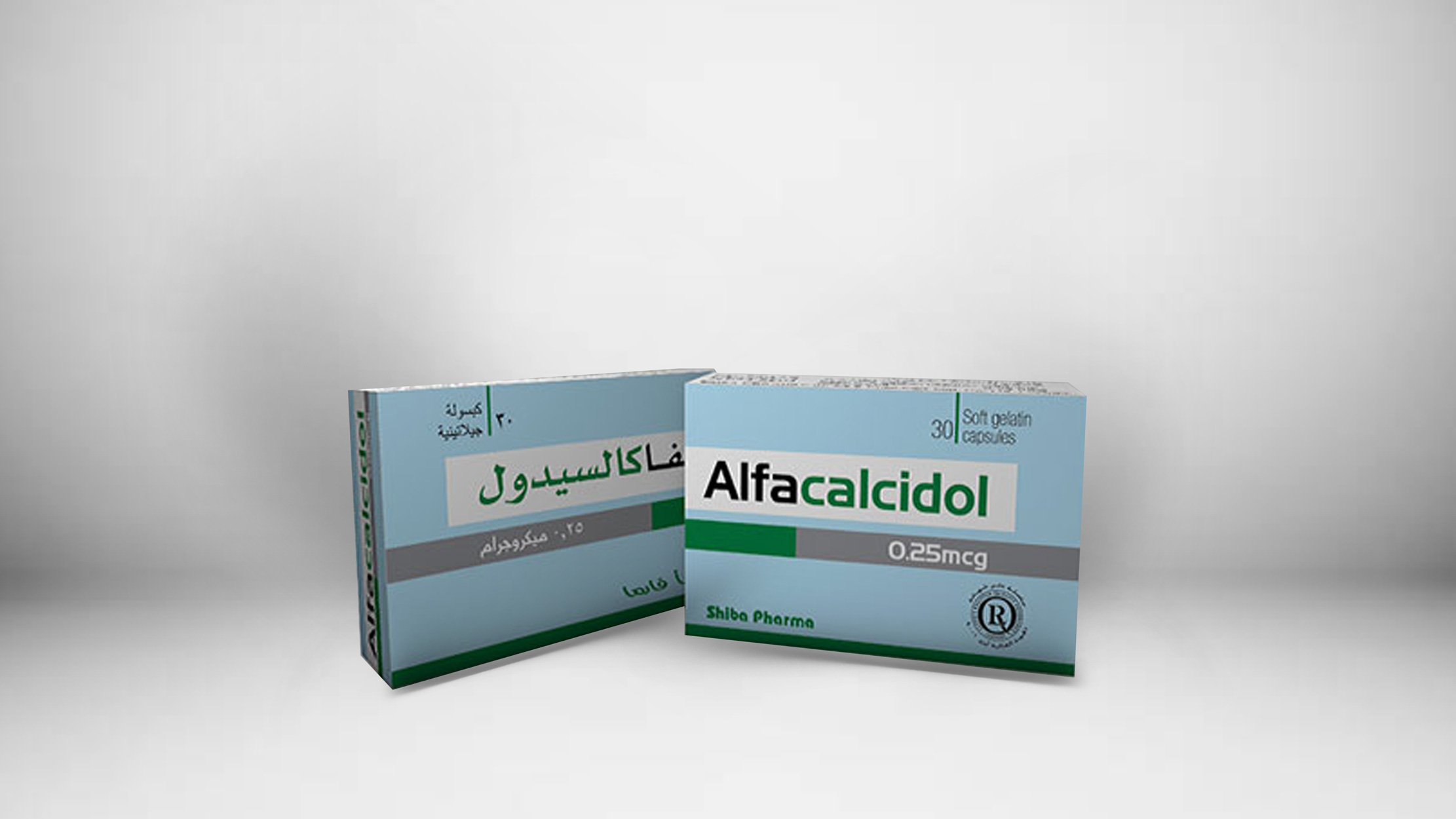
- Alfacalcidol 0.25 mcg: Pack of 30 soft gelatin capsules and hospital packs of different sizes.
- Alfacalcidol 1 mcg: Pack of 30 soft gelatin capsules and hospital packs of different sizes.