
Section :
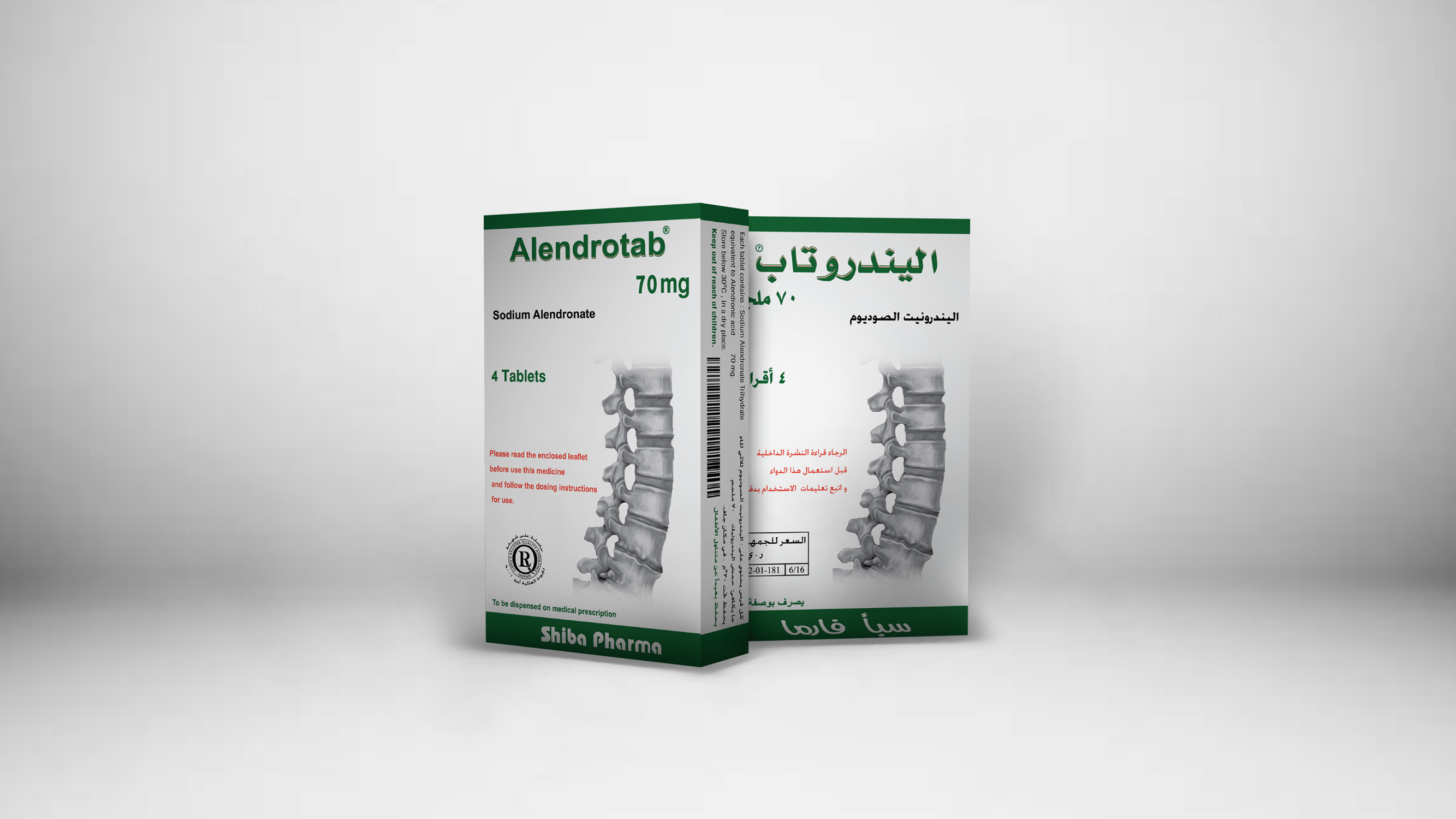
Alendrotab
📌 COMPOSITION
Each tablet contains: Alendronate Sodium trihydrate equivalent to Alendronic acid 10 mg or 70 mg.
📌 DESCRIPTION
Alendrotab (Alendronate Sodium trihydrate) is a bisphosphonate that inhibits osteoclastic bone resorption with no direct effect on bone formation, and bone mineral density (BMD) is increased. The bone formed during treatment with Alendronate is of normal quality. Protein binding is about 78%. Alendronate does not appear to be metabolized. The elimination half-life is estimated to exceed 10 years.
📌 INDICATIONS
Alendrotab is used for:
- Treatment and prevention of osteoporosis in postmenopausal women.
- To increase bone mass in men with osteoporosis.
- Treatment of glucocorticoid-induced osteoporosis in men and women.
- Treatment of Paget's disease of bone.
📌 ADMINISTRATION & DOSAGE
- The patient should take the tablet in the morning after getting up and at least 30 minutes before taking the first food, beverage (including mineral water), medicinal products (including calcium supplements or antacids), or doing any daily activities, because Alendronate is effective only if taken on an empty stomach.
- The patient should swallow the tablet whole with a full glass of plain water (not less than 200 ml). The tablet should not be crushed, chewed, or dissolved in the mouth.
- The patient should not lie down; they should stay fully upright (sitting, standing, or walking) for at least 30 minutes after taking the drug.
- The patient should not take the tablet before going to bed.
- Patients should receive supplemental calcium and vitamin D if dietary intake is inadequate.
- Patients should be advised to do exercise.
- For the 70 mg dose, the patient should choose one day of the week that fits their schedule and should take the tablet each week on the same chosen day.
In case of missing a dose:
- Alendrotab 10 mg once daily: If the patient misses a dose of 10 mg, they should take it the next morning and continue taking the tablet daily as usual. They should not take two tablets on the same day.
- Alendrotab 70 mg once weekly: If the patient misses a dose of 70 mg, they should take it the next morning and return to taking the tablet on the chosen day as originally scheduled. They should not take two tablets on the same day.
Dosage:
- Treatment of osteoporosis in postmenopausal women: 70 mg once weekly or 10 mg once daily.
- To increase bone mass in men with osteoporosis: 70 mg once weekly or 10 mg once daily.
- Prevention of osteoporosis in postmenopausal women: 35 mg (half of a 70 mg tablet) once weekly or 5 mg (half of a 10 mg tablet) once daily.
- Treatment of glucocorticoid-induced osteoporosis in men and women: The recommended dosage is 5 mg (half of a 10 mg tablet) once daily, except for postmenopausal women not receiving estrogen, for whom the recommended dosage is 10 mg once daily.
- Paget's disease of bone: 40 mg (4 tablets of 10 mg) once daily for six months.
- No dosage adjustment is necessary for elderly patients.
- Use in renal impairment: No dosage adjustment is necessary for patients with GFR greater than 35 ml/min.
📌 RESTRICTIONS ON USE
Contraindications
- Hypersensitivity to Alendronate.
- Patients with esophageal problems such as narrowing or difficulty in swallowing.
- Inability to stand or sit upright for at least 30 minutes.
- Hypocalcaemia.
- Patients with severe renal impairment when GFR is less than 35 ml/min.
- Pregnant or lactating women, or children below 18 years of age.
Precautions
- Caution should be taken in patients with swallowing or digestive problems.
- If difficulty or pain upon swallowing, chest pain, or heartburn develops after taking Alendrotab, the patient should stop taking the drug and consult the doctor.
- Caution should be taken in patients with poor dental health, gum disease, or those who do not receive routine dental care.
- Caution should be taken in patients with cancer or those undergoing chemotherapy or radiotherapy.
- Caution should be taken in patients who are taking corticosteroids such as dexamethasone or prednisone.
- Patients should be advised to stop smoking, as it may increase the risk of broken bones.
- It is recommended to do periodic examinations such as dental check-ups during treatment with Alendrotab, as well as tests for bone density and blood calcium level.
Effect on the ability to drive vehicles or use machines
Alendrotab may cause blurred vision, dizziness, bone, muscle or joint pain, which may affect the ability to drive or use machines.
Use in Pregnancy & Lactation
Alendrotab should not be used during pregnancy and lactation.
📌 DRUG INTERACTIONS
- Concomitant use of Alendronate with calcium supplements or antacids interferes with the absorption of Alendronate.
- Concomitant use of Alendronate with aspirin or other NSAIDs can increase upper gastrointestinal adverse events.
📌 ADVERSE EFFECTS
As with other medicines, not all patients get adverse effects, and not all of these adverse effects may occur. The common effect is abdominal pain. Some patients may experience bone, muscle or joint pain, heartburn, difficulty in swallowing, bloating, headache, dizziness, constipation or diarrhoea. Less frequent effects are nausea, vomiting, blurred vision, rash, and altered sense of taste. Rarely, allergic reactions (swelling of the face, lips, tongue and/or throat, which may cause difficulty in breathing or swallowing) are also reported.
📌 OVERDOSAGE
Symptoms: Hypocalcaemia, gastritis, esophagitis, heartburn, and ulcer may result from overdosage.
Treatment: If an overdose is taken, the patient should drink a full glass of milk or take antacids and immediately go to the hospital. They should not lie down or induce vomiting.
📌 STORAGE INSTRUCTIONS
Store below 30°C in a dry place.
📌 PHARMACEUTICAL FORMS
- Alendrotab 10 mg: Blister of 30 tablets and hospital packs of different sizes.
- Alendrotab 70 mg: Blister of 4 tablets and hospital packs of different sizes.